
Dog grooming at home is becoming more popular every year. Pet owners want their dogs to look good, feel comfortable, and stay healthy—without always visiting a professional groomer. One of the most important tools for home grooming is a good pair of dog grooming scissors. But using these scissors correctly is not as simple as picking them up and cutting. If you use the wrong technique, you might hurt your dog, damage their coat, or end up with a style you didn’t want.
Learning how to use dog grooming scissors safely and effectively is a skill that can save you money and help your dog feel more relaxed during grooming sessions. In this guide, you’ll find everything you need: from choosing the right scissors, preparing your dog, and step-by-step instructions for different coat types, to safety tips that many beginners overlook. Whether you have a fluffy Poodle, a wiry Schnauzer, or a short-haired Beagle, you’ll discover practical advice and professional secrets for better results.
Understanding Dog Grooming Scissors
Dog grooming scissors are not the same as regular household scissors. They are made for cutting fur, not paper or fabric. The blades, handles, and even the materials are different. Using the right scissors makes grooming faster, safer, and more comfortable for both you and your dog.
Types Of Dog Grooming Scissors
There are several main types of grooming scissors, each designed for a different purpose:
- Straight Scissors: These are the most common. They are used for general cutting and shaping.
- Curved Scissors: The blades are slightly curved. They help create round shapes, especially on heads, feet, and tails.
- Thinning Shears: These have a comb-like blade on one side. They remove bulk and blend different lengths of hair for a natural look.
- Chunkers: Similar to thinning shears but with wider teeth. They are used for texturizing and finishing.
- Safety-Tip Scissors: The tips are rounded to prevent poking the dog by accident. Great for sensitive areas.
Example Table: Comparing Grooming Scissors
| Type | Main Use | Best For | Safety |
|---|---|---|---|
| Straight | General cutting | All breeds | Standard |
| Curved | Shaping curves | Face, feet, tail | Standard |
| Thinning | Blending/finishing | Thick coats | High |
| Chunkers | Texturizing | Wavy coats | Medium |
| Safety-tip | Delicate areas | Puppies, faces | Very High |
Key Features To Look For
When buying grooming scissors, pay attention to:
- Blade sharpness: Dull scissors pull hair and can cause pain.
- Material: Stainless steel is best for durability and rust resistance.
- Handle comfort: Ergonomic handles reduce hand fatigue.
- Size and weight: Choose a length and weight you can control easily.
- Tension adjustment: Some scissors have a screw to adjust blade tightness.
Pro Tip: Many beginners only focus on blade sharpness. But handle comfort and scissor weight are just as important if you plan to groom for more than a few minutes.
Preparing For Grooming
A good grooming session starts before you pick up the scissors. Preparation keeps your dog calm and ensures a better result.
Gathering Your Supplies
Have everything ready before you start:
- Dog grooming scissors (the right types for your dog’s coat)
- Comb and slicker brush
- Detangling spray (if your dog mats easily)
- Towels
- Treats for rewarding good behavior
- Styptic powder (to stop bleeding if you accidentally nick the skin)
Preparing Your Dog
A calm dog is easier to groom. Here’s how to get your pet ready:
- Exercise first: Give your dog a walk or play session to burn off energy.
- Bath and dry: Clean fur is easier to cut. Make sure the coat is completely dry—wet fur can dull scissors and is harder to cut evenly.
- Brush thoroughly: Remove mats and tangles. Cutting through mats with scissors can hurt your dog and damage the blades.
- Choose a quiet spot: Pick a location without distractions. Place a non-slip mat on the table or floor.
Checking For Problems
Before grooming, do a quick health check:
- Look for skin irritations or wounds.
- Check for fleas or ticks.
- Feel for lumps or bumps you didn’t notice before.
If you find anything unusual, contact your vet before grooming. Cutting near wounds or infections can make things worse.
Non-Obvious Insight: Many owners forget to check for hidden mats—especially behind the ears, under the legs, and near the tail. These areas mat quickly and are painful if cut without detangling.
How To Hold And Use Dog Grooming Scissors
How you hold the scissors affects your control, accuracy, and safety. Poor grip leads to tired hands and uneven cuts.
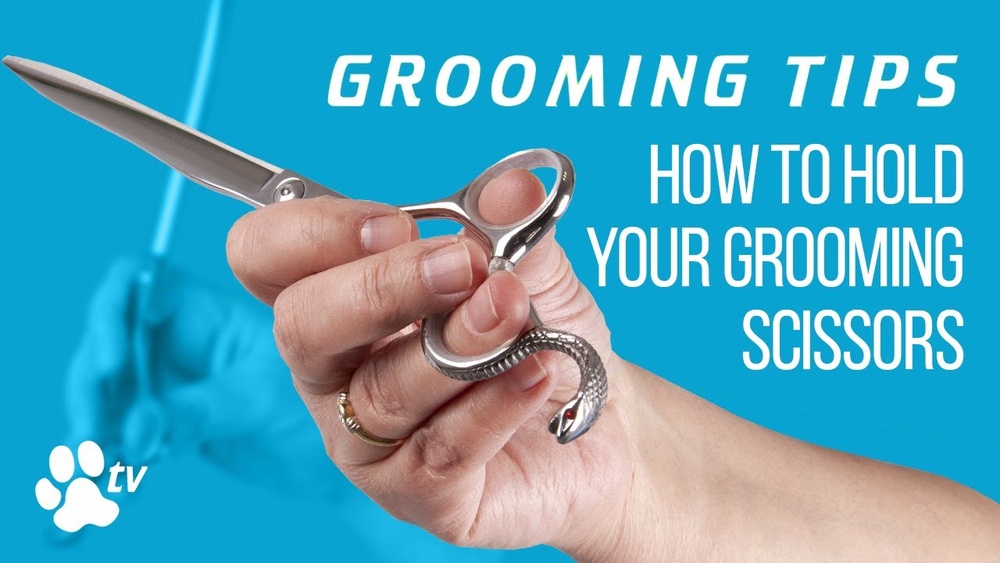
Correct Scissor Grip
Hold grooming scissors like a professional:
- Place your thumb in the bottom handle and your ring finger in the top handle.
- Rest your little finger on the finger rest (if your scissors have one).
- Use your index and middle fingers to support the scissor for better balance.
- Keep your wrist relaxed and your elbow close to your body.
This grip reduces hand fatigue and helps you make smoother cuts. Avoid using your whole arm—move the scissors mainly with your fingers for small, precise snips.
Experience-Based Tip: Beginners often use their whole hand, making big, jerky movements. This can startle your dog and cause mistakes. Practice small, finger-driven snips on a piece of paper before trying on your dog.
Basic Cutting Techniques
- Point cutting: Hold scissors vertically and make small cuts into the ends of the fur. This creates a softer, natural look.
- Scissoring against the coat: For more volume, cut against the direction of hair growth. For a sleek look, cut in the same direction as the hair grows.
- Blending: Use thinning shears to blend different coat lengths, especially where legs meet the body.
Using Scissors Safely
- Keep blades parallel to the skin. Never point them toward your dog’s body.
- Cut small sections at a time. Rushing leads to mistakes and injuries.
- Always know where your dog’s skin is—use a comb to lift fur away from the skin before cutting.
- Stop if your dog moves suddenly. Don’t try to “catch up” with a moving target.
Grooming Different Coat Types
Every breed and coat type has its own challenges. Using the right scissors and technique for your dog’s coat is essential.
Long, Silky Coats
Breeds like Shih Tzus, Maltese, and Yorkies have long, straight hair that tangles easily.
- Start by detangling with a slicker brush and comb.
- Use straight scissors for the body and curved scissors for shaping the face and paws.
- Work in layers: Lift the top coat and trim the undercoat first, then blend the top layer.
- Point cut into the ends to avoid harsh lines.
Common Mistake: Many owners try to cut large sections at once. This results in uneven lines and a choppy look. Always work slowly, trimming little by little.
Double Coats
Breeds like Golden Retrievers, Huskies, and Pomeranians have a soft undercoat and a coarser topcoat.
- Never shave a double coat—it can ruin the fur’s ability to insulate.
- Use thinning shears to remove bulk and shape the outline.
- Use straight scissors for trimming feathering on legs, chest, and tail.
- Always follow the natural line of the coat.
Pro Tip: After scissoring, use a comb to check for missed long hairs (“flyaways”) and trim them for a smooth finish.
Curly And Wavy Coats
Poodles, Bichons, and Doodles have curly or wavy hair that grows continuously.
- Curved scissors are best for shaping the head, feet, and tail.
- Use straight scissors to trim the body evenly.
- Thinning shears help blend transition areas and soften the look.
Curly coats hide mistakes well, but they also tangle easily. Always brush out curls before and after cutting.
Non-Obvious Insight: For curly coats, it’s often better to cut a little longer than you think. Curls spring back and look shorter after drying.
Wire And Harsh Coats
Breeds like Schnauzers and Terriers have stiff, wiry hair.
- Use straight scissors for trimming the body and legs.
- Chunkers are useful for adding texture and blending harsh lines.
- Avoid thinning shears for wire coats—they can make the fur look fuzzy.
Scissoring is usually done after hand-stripping (pulling out dead hair by hand or with a tool).
Short Coats
Beagles, Boxers, and Dalmatians have short, sleek hair.
- Scissors are rarely needed for these breeds, except to tidy feet, face, or tail.
- Safety-tip scissors are best for trimming around the eyes and paws.
Pro Tip: Even if your short-haired dog doesn’t need much scissoring, trimming the hair between paw pads can help prevent slipping and keep feet clean.
Step-by-step Guide: Grooming With Scissors
Now let’s break down the actual process of grooming with scissors. Each step builds on the last, so don’t rush.
1. Prepare The Area And Tools
- Choose a spot with good lighting.
- Use a grooming table or a sturdy, non-slip surface.
- Lay out your scissors, comb, brush, and treats.
2. Calm And Secure Your Dog
- Place your dog on the grooming surface.
- Use a leash or grooming loop if needed (never leave your dog unattended).
- Offer treats and speak calmly to reduce anxiety.
3. Brush And Detangle The Coat
- Use a slicker brush for general brushing.
- Comb through every section, especially under the legs and behind the ears.
- Spray a detangler if you find any mats, then gently work them out before cutting.
4. Plan Your Cut
- Decide what areas you want to trim: Body, legs, face, tail.
- Look at your dog from all angles to see the overall shape.
- Start with the area your dog is most comfortable with.
5. Begin Scissoring
- Use straight scissors for long, straight cuts on the body.
- Hold the fur with a comb, lift it away from the skin, and cut small sections at a time.
- Use curved scissors for rounded areas (head, feet, tail).
- Use thinning shears to blend lines and soften transitions.
6. Work Slowly And Check Often
- Step back every few minutes to check your work.
- Comb the fur to see if any long hairs are sticking out.
- Trim as needed for a balanced look.
7. Finish Sensitive Areas
- Use safety-tip scissors for trimming around eyes, ears, and paw pads.
- Be extra gentle—dogs are sensitive here and may move suddenly.
8. Final Touches
- Comb through the coat one last time.
- Use thinning shears or chunkers for a soft, natural finish.
- Give your dog a treat and praise.
Practical Example: If you’re grooming a Shih Tzu, start with the body using straight scissors. Then switch to curved scissors for the face, moving slowly around the eyes and mouth. Use thinning shears at the neck to blend the transition to the body.
Safety Tips And Common Mistakes
Grooming scissors are very sharp. Even a small slip can lead to cuts or injuries. Here’s how to stay safe:
Top Safety Tips
- Keep scissors sharp. Dull blades pull hair and increase the risk of injury.
- Clean scissors after every use. Hair and dirt can dull the blades and cause rust.
- Never rush. Take your time, especially near sensitive areas.
- Always know where the skin is. Use a comb to lift hair away before cutting.
- Stop if your dog is stressed or restless. A quick break is better than an accident.
Common Mistakes To Avoid
- Cutting mats with scissors: This can pull and hurt your dog. Always detangle first.
- Cutting too close to the skin: Leaves bald spots and increases risk of cuts.
- Not checking blade tension: Loose blades won’t cut; tight blades can lock up.
- Not blending lines: Creates choppy, uneven results.
- Using the wrong scissors: Each type has a specific purpose. Learn when to use straight, curved, thinning, or safety-tip scissors.
Non-Obvious Insight: Many people forget to regularly oil their scissors. This keeps them smooth and extends their life.
Cleaning And Maintaining Your Scissors
Well-maintained scissors cut better and last longer.
Cleaning Steps
- Wipe blades with a soft, dry cloth after each use.
- Wash with warm water and mild soap if they get dirty. Dry immediately.
- Oil the pivot point with a drop of scissor oil every few uses.
- Store in a dry place, preferably in a protective case.
Sharpening
- Home sharpening kits are available, but for best results, have your scissors professionally sharpened at least once a year.
- Dull scissors are not just ineffective—they can cause pain and injuries.
Pro Tip: Never use your grooming scissors for anything but dog hair. Cutting paper, fabric, or even your own hair can dull the blades quickly.
When To Use Clippers Vs. Scissors
Scissors are great for detail work and finishing touches, but sometimes you need electric clippers for larger jobs.
Clippers
- Cover large areas quickly (body, legs, etc.)
- Best for very thick or matted coats
Scissors
- Detail work (face, feet, tail)
- Blending and shaping
- Sensitive or hard-to-reach areas
Example Table: Clippers Vs. Scissors
| Tool | Best For | Precision | Speed |
|---|---|---|---|
| Clippers | Large areas | Low | High |
| Scissors | Detail work | High | Low |
Practical Advice: For most home grooming, a combination of clippers for the body and scissors for the finishing touches gives the best results.

Credit: www.wowgrooming.co.uk
Grooming Puppies And Nervous Dogs
Grooming young or anxious dogs takes patience and special care.
For Puppies
- Start with short sessions (5–10 minutes).
- Use safety-tip scissors only.
- Reward with treats and praise.
- Let them sniff and see the scissors before you begin.
For Nervous Dogs
- Groom after exercise, when they’re tired.
- Play calming music or use a pheromone diffuser.
- Go slowly and stop if they show signs of stress.
Experience-Based Tip: If your dog is very anxious, try practicing “mock grooming” with a comb and treats before using scissors. This builds positive associations and reduces fear.
Grooming Styles And Breed Standards
If you want your dog to look like a show dog, you’ll need to learn the breed standard haircut. For most pet owners, though, a neat, comfortable style is enough.
Popular Pet Styles
- Teddy Bear Cut: Rounded face and even body length. Popular for Poodles and Doodles.
- Puppy Cut: Same length all over, usually 1–2 inches.
- Breed Standard Cut: Each breed has its own official style (consult breed club websites for guides).
Pro Tip: Not all dogs need a fancy style. The best cut is one your dog feels good in and that you can maintain.

Credit: paragonpetschool.com
Real-world Example: Home Grooming Session
Imagine you have a medium-sized Poodle with a curly coat. Here’s a realistic home grooming session using only scissors:
- Exercise your dog for 20 minutes.
- Bathe and dry the coat fully.
- Brush out all tangles with a slicker brush.
- Start with straight scissors on the body, trimming the coat to your desired length (about 1.5 inches).
- Switch to curved scissors for the head, rounding the top and shaping around the eyes.
- Use thinning shears to blend the neck into the body for a soft transition.
- Trim around the feet and tail with curved scissors for a rounded look.
- Comb and check for any uneven spots, trimming as needed.
- Reward your dog with a treat and lots of praise.
This process can take 45–90 minutes depending on the dog’s size and coat length.
Choosing The Right Scissors: Price, Quality, And Brands
Prices for grooming scissors range from $10 to over $100 per pair. Here’s what to consider:
Price Vs. Quality
- Budget scissors ($10–$30): Good for beginners or small dogs. May dull quickly.
- Mid-range ($30–$70): Better steel, last longer, more comfortable.
- Professional ($70+): High-quality steel, extremely sharp, designed for daily use.
Comparison Table: Scissor Price Ranges
| Price Range | Quality | Best For | Expected Lifespan |
|---|---|---|---|
| $10–$30 | Basic | Beginners | 1–2 years |
| $30–$70 | Good | Home grooming | 3–5 years |
| $70+ | Professional | Frequent use | 5+ years |
Popular Brands
Some trusted brands include:
- Kenchii
- Sharf
- Groomer’s Choice
- Andis
- Geib
Pro Tip: For most home groomers, a good mid-range set is more than enough. Don’t spend hundreds until you know exactly what you like.
Professional Groomer Secrets
Professional groomers have some tricks that can make home grooming easier:
- Always groom in good light. Natural daylight is best.
- Check your cut from all angles. Walk around your dog, not just one side.
- Keep treats handy to reward calm behavior.
- Use finishing sprays to make the coat shiny and soft.
- Take breaks. Even pros groom in short sessions to keep dogs relaxed.
Non-Obvious Insight: Many professionals keep a “quiet” pair of scissors with a soft open/close action. No clicking or loud noises to startle the dog.
Resources For Learning More
If you want to master scissoring techniques, consider watching videos from certified groomers, reading breed club guides, or joining online grooming forums. For official breed standards, check the American Kennel Club’s resources at AKC Dog Breeds.

Credit: www.youtube.com
Frequently Asked Questions
How Often Should I Groom My Dog With Scissors?
It depends on your dog’s breed and coat type. Long-haired and curly-coated dogs may need scissoring every 4–6 weeks. Short-haired breeds need trimming only for tidy feet or faces every few months.
Is It Safe To Use Regular Scissors On My Dog?
No. Dog grooming scissors are designed for fur and have safety features. Regular scissors are dull, can pull hair, and increase the risk of injury.
What Should I Do If I Accidentally Cut My Dog’s Skin?
Stay calm. Use styptic powder to stop bleeding and clean the area gently. If the cut is deep or won’t stop bleeding, call your vet.
Can I Use Thinning Shears On Any Coat Type?
Thinning shears are best for thick, double, or curly coats. Avoid using them on wiry coats or very short hair, as they can create uneven patches.
How Do I Know If My Scissors Need Sharpening?
If the scissors start pulling hair, cutting unevenly, or you feel increased resistance, it’s time for sharpening. Dull scissors can cause pain and ruin the coat’s look.
Dog grooming with scissors is a rewarding skill that helps you bond with your pet and keep them looking their best. With practice, patience, and the right tools, you can achieve salon-quality results at home—safely and comfortably for both you and your dog.