
Many cat owners notice their elderly cats develop matted fur more often than younger cats. These tight, tangled clumps of hair not only look uncomfortable, but they can also cause real pain, skin problems, and even lead to infection. If you’re caring for a senior cat with mats, you know it’s not always easy—or safe—to simply cut or brush them out. Older cats have thinner skin, sensitive bodies, and may not tolerate long grooming sessions. But with the right approach, patience, and understanding, you can help your aging feline feel comfortable again.
In this guide, you’ll find clear, step-by-step advice on how to remove matted fur from an elderly cat safely and gently. You’ll learn why mats happen, what tools to use (and avoid), practical grooming strategies, and how to prevent mats from returning.
We’ll also cover when to seek professional help and provide answers to common questions worried cat owners ask. If you want your senior cat to enjoy smoother, healthier fur and less stress, read on.
Why Elderly Cats Get Matted Fur
As cats age, they often develop more mats in their fur. This isn’t just about looks—matted hair can signal changes in a cat’s health, grooming ability, or lifestyle.
Decreased Grooming
Older cats may not groom as well as they used to. Arthritis, dental problems, or stiffness can make it hard for them to reach certain areas. When cats lick themselves less, loose hair and debris build up, creating mats.
Health Issues
Medical problems like kidney disease, obesity, or arthritis affect mobility and energy. If your cat has an underlying illness, she may be unable or unwilling to groom.
Thinner Skin
Senior cats have thinner, more fragile skin. This makes mats harder to remove without causing injury. Pulling or rough brushing can tear their delicate skin.
Longer Or Thicker Coats
Breeds with long or dense fur—like Maine Coons or Persians—are more prone to mats, especially as they age.
Changes In Activity
Elderly cats may spend more time lying down, especially on soft surfaces. This can compress and tangle the fur, leading to more mats.
Key Insight: Many cat owners miss that mats can signal underlying health problems. If your older cat suddenly develops mats, a vet check is wise. Also, senior cats often hide pain, so reduced grooming isn’t always obvious.
Dangers Of Matted Fur In Senior Cats
Mats are more than just a cosmetic issue. For elderly cats, the risks are even greater.
- Skin irritation: Matted fur pulls on the skin, causing soreness and redness.
- Infections: Moisture and bacteria can get trapped under mats, leading to hot spots or abscesses.
- Pain: Tight mats pinch the skin. Every movement can hurt.
- Restricted movement: Large mats, especially on legs or belly, can limit mobility.
- Parasites: Fleas and mites often hide under mats, where they’re hard to spot.
According to a study published by the American Association of Feline Practitioners, nearly 30% of elderly cats examined had skin lesions associated with matted fur. In severe cases, mats can cut off blood flow and cause open wounds.
Before You Start: Preparing To Remove Mats
Removing mats from an elderly cat is different from grooming a younger one. Planning ahead makes the process safer and less stressful.
Assess Your Cat
First, check your cat’s overall health and behavior. Does she seem comfortable being touched? Is she eating and moving normally? If your cat seems ill, is very thin, or has open wounds, see a vet before attempting any grooming.
Choose A Safe Space
Pick a quiet, well-lit room. Place a towel or non-slip mat on a stable surface (like a table or counter). This helps your cat feel secure and prevents slipping.
Gather The Right Tools
Using the correct tools can make all the difference. Here are the most helpful (and safest) options:
| Tool | Best For | Special Notes |
|---|---|---|
| Wide-tooth comb | Loosening large tangles | Gentle on fragile skin |
| Slicker brush | Surface mats | Use with caution; avoid if skin is very thin |
| Blunt-tipped scissors | Cutting small, tight mats | Safer than pointed scissors |
| Mat splitter (dematting tool) | Breaking up tough mats | Choose one with rounded edges for safety |
| Pet-safe detangling spray | Softening mats | Never use human hair products |
Avoid: Regular scissors (too sharp), razors, or strong chemicals. These are dangerous for elderly cats.
Prepare Yourself
Trim your nails and wash your hands. Wear long sleeves if your cat tends to scratch. If possible, ask someone your cat trusts to help hold or comfort her.
Comfort Measures
Have treats on hand. Soft, calm music can help relax both you and your cat. Work in short sessions (5–10 minutes), especially if your cat gets stressed.
Non-Obvious Tip: Place a lightly warmed towel (not hot!) under your cat. The warmth can relax muscles and make mats a bit easier to work out.
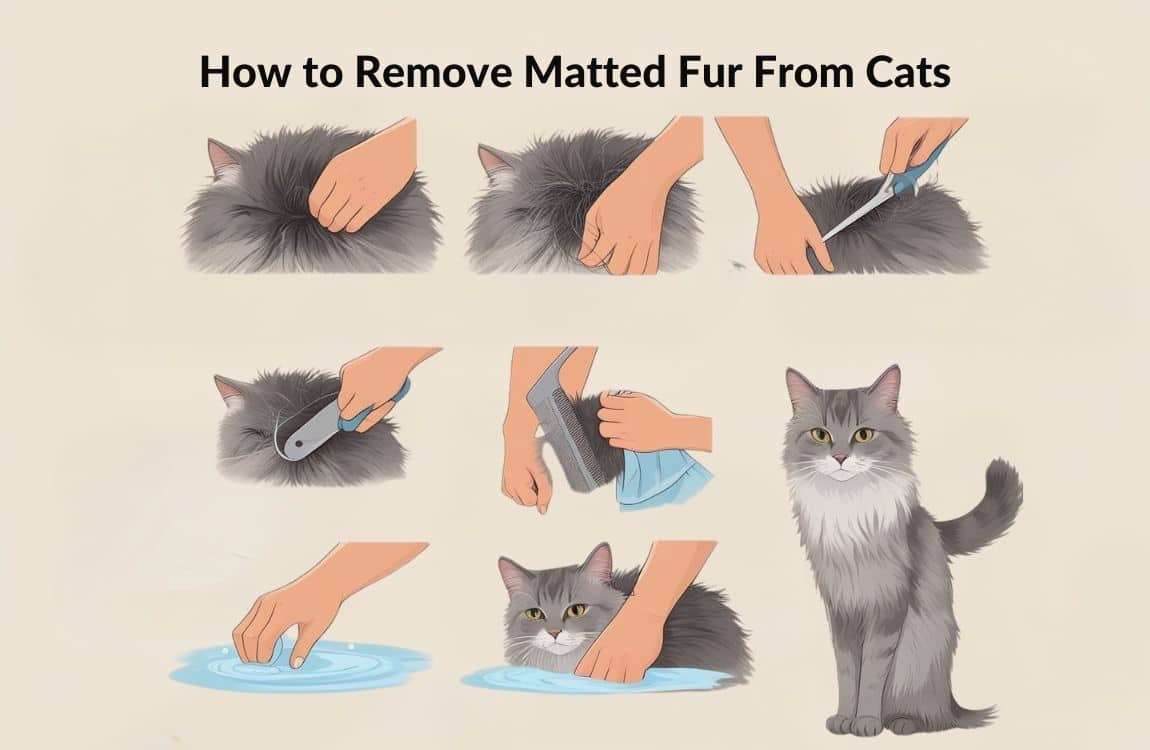
Step-by-step: How To Remove Matted Fur From An Elderly Cat
Removing mats needs patience, care, and the right technique. Rushing or using force can injure your cat.
Step 1: Calm Your Cat
Gently pet your cat and speak softly. If she seems anxious, wait until she’s relaxed or try again later.
Step 2: Examine The Mats
Find all the mats by gently parting the fur with your fingers. Identify which mats are loose and which are tight or close to the skin. Never pull hard; this can hurt or tear the skin.
Step 3: Loosen With Fingers
Try to gently tease apart small mats with your fingers before using any tools. If the mat is soft, this may be enough.
Step 4: Use A Detangling Spray
Spray a small amount of cat-safe detangler on the mat (never use human products). Wait a minute to let it soak in. This often softens the mat for easier removal.
Step 5: Comb Out The Mat
Use a wide-tooth comb, starting at the mat’s edge. Hold the fur near the skin to avoid pulling. Work in small sections, moving slowly. If your cat becomes distressed, stop and try again later.
Step 6: Tackle Tough Mats With A Mat Splitter
For stubborn mats, a mat splitter can help. Slide the tool gently under the mat, keeping it parallel to the skin. Use slow, gentle strokes to break the mat into smaller pieces. Don’t saw back and forth—this can cut the skin.
Step 7: Cutting Mats (last Resort)
If a mat cannot be combed or split, you may need to cut it out. Use blunt-tipped scissors. Place a comb between the mat and your cat’s skin to prevent accidents. Cut only the mat, never close to the skin. If you’re unsure, ask a groomer or vet for help.
Important Insight: Many owners try to cut out mats without a barrier between fur and skin. This causes most grooming injuries in elderly cats. Always use a comb as a shield.
Step 8: Check The Skin
After each mat is removed, look at the skin for redness, wounds, or signs of infection. If you see sores or bleeding, stop and call your vet.
Step 9: Reward And Rest
Give your cat a treat or gentle praise after each session. Let her rest between grooming times. Never try to remove all mats in one sitting if your cat is stressed.
Step 10: Clean Up
Wash your hands and tools after each session. This prevents the spread of bacteria.
Special Considerations For Senior Cats
Elderly cats need extra care. Their bodies and skin react differently than those of younger cats.
Thin, Sensitive Skin
Senior cats’ skin tears easily. Even gentle brushing can cause injury if you’re not careful. Always support the skin and use slow, small movements. If you feel resistance, stop and reassess.
Limited Mobility
Arthritis or pain may make some positions uncomfortable. If your cat can’t stand or turn, adjust your approach. Work on mats that are easy to reach, then let your cat rest.
Stress And Anxiety
Older cats can become anxious during grooming. If your cat pants, trembles, or tries to bite, stop immediately. It’s better to remove one mat per day than to risk stress or injury.
Medication And Health Issues
Some elderly cats take medication that thins the skin or makes them sleepy. Be gentle and aware of side effects. If your cat is on steroids or has a bleeding disorder, consult your vet before grooming.
Practical Example: If your cat has mats on her back but arthritis in her hips, avoid lifting or bending her legs. Instead, gently turn her on her side and support her with a pillow.
What To Do If You Can’t Remove The Mats
Sometimes, mats are too large, too tight, or too close to the skin for safe home removal. Here’s what you can do:
- Call your vet or a professional groomer. Ask if they have experience with elderly cats.
- Many mats require sedation or special tools only available at the vet.
- If your cat is very stressed, sick, or has open wounds, professional help is safest.
Note: Removing very tight mats at home can cause skin tears, bleeding, and trauma. Don’t risk it—ask for help.
Credit: www.youtube.com
Preventing Mats From Coming Back
Prevention is easier than removal, especially for elderly cats.
Regular Brushing
Brush your cat several times a week, even if she has short hair. Use a soft brush and work in short sessions. Focus on areas where mats form most: behind ears, under the legs, and around the tail.
Check For Mats Often
Run your hands over your cat’s body every day. Early detection means smaller mats that are easier to remove.
Support Grooming
If your cat can’t groom herself, help by wiping her coat with a damp cloth or grooming wipe. These remove loose hair and dirt.
Keep Fur Trimmed
If your cat has long hair, consider regular trims—especially in problem areas. Some owners choose a “sanitary trim” around the rear for easier cleaning.
Address Health Problems
Work with your vet to manage arthritis, obesity, or dental issues. Treating pain or illness often improves a cat’s ability to groom.
Nutrition And Hydration
Good diet and hydration support skin and coat health. Ask your vet about diets rich in omega-3 fatty acids for coat quality.
Expert Tip: Many owners focus only on brushing the back and sides. Mats often start in hidden areas—like the belly, behind the front legs, and under the collar. Check these spots regularly.
Helpful Products For Grooming Elderly Cats
Choosing the right grooming products can make a big difference. Here’s a quick comparison of common grooming aids:
| Product | How It Helps | Suitability for Senior Cats |
|---|---|---|
| Soft-bristle brush | Gentle detangling, daily use | Excellent for all seniors |
| Dematting comb | Breaks up tough mats | Good, if used carefully |
| Pet grooming wipes | Removes dirt, loose hair | Very safe, no stress |
| Cat-safe detangling spray | Softens mats for easier removal | Safe, but check for allergies |
| Blunt-tipped scissors | Cuts out severe mats | Use only with comb as barrier |
Caution: Avoid anything with sharp blades, strong scents, or harsh chemicals.
When To See A Vet Or Professional Groomer
Not all mats can be safely removed at home. Know when to seek help:
- Mats are very large, tight, or cover sensitive areas (armpits, genitals, belly).
- Your cat’s skin is red, bleeding, or shows sores.
- Your cat is in pain, very anxious, or fights grooming.
- You cannot see where the mat ends and the skin begins.
- Your cat has health issues that make grooming risky.
Vets and professional groomers have special tools and experience. They can use sedation if needed, which is much safer than struggling at home. Many also check for underlying health issues that may cause mats.
Non-Obvious Insight: Some owners feel embarrassed to ask for help, but professionals see these cases often. It’s a sign of good care—not neglect—to seek expert help when needed.
For more guidance on finding a qualified groomer, you can check resources such as the American Association of Feline Practitioners.
Dealing With Aftercare And Skin Healing
After mats are removed, your cat’s skin may need some extra attention. Here’s how to help her recover:
- Check for redness, bumps, or bald spots.
- Clean the skin gently with a soft, damp cloth if needed.
- Watch for licking, scratching, or signs of discomfort.
- Avoid bathing your cat unless absolutely necessary—baths can dry out senior cats’ skin.
- If you see wounds, crusts, or oozing, call your vet. Sometimes antibiotics or special creams are needed.
Practical Example: If you removed a mat and the skin is pink but not open, a small amount of vitamin E oil (ask your vet first) can soothe irritation.
How To Make Grooming A Positive Experience
Changing the way your cat feels about grooming can make a huge difference—especially for elderly cats who may have painful memories of mat removal.
Start Small
Begin with short, gentle sessions. Even one minute a day can help your cat adjust. End every session with a treat or favorite activity.
Use Positive Reinforcement
Give your cat a reward after each successful grooming session. This could be a small treat, extra petting, or playtime.
Watch Body Language
Learn your cat’s signals. If she flattens her ears, swishes her tail, or tenses up, take a break. Forcing grooming leads to stress and resistance.
Be Consistent
Regular, gentle grooming builds trust. Skipping sessions makes mats more likely to return.
Expert Guidance: Never punish or scold your cat during grooming. Negative experiences make mats harder to manage in the future.
Common Mistakes To Avoid
Even well-meaning owners can make mistakes when removing mats from an elderly cat. Here are the most common pitfalls—and how to avoid them:
- Using sharp scissors or razors near the skin—this causes most grooming injuries.
- Trying to remove all mats at once—leads to stress, pain, and resistance.
- Forcing your cat to stay still—can cause panic and increase the risk of injury.
- Ignoring signs of pain—older cats hide discomfort but may become aggressive if hurt.
- Skipping regular checks—waiting until mats are large makes removal much harder.
- Not asking for help—if you’re unsure, consult a vet or groomer.
:strip_icc()/how-to-de-mat-a-cat-552043-hero-5b73bb2c3cf44a52b2f6527f9478a4f2.jpg)
Credit: www.thesprucepets.com
Real-life Example: Removing Mats From An Elderly Cat
Let’s look at a real-world scenario. “Tiger” is a 14-year-old long-haired cat with arthritis. His owner noticed mats forming on his lower back and behind his legs. Here’s how she handled it:
- She waited until Tiger was relaxed on her lap.
- She gently teased apart the soft mats with her fingers, supporting his skin.
- For tougher mats, she applied a small amount of detangling spray and waited two minutes.
- Using a wide-tooth comb, she worked from the edge of the mat toward the center, always holding the fur close to the skin.
- One mat was too tight, so she used blunt-tipped scissors and a comb as a barrier—cutting only the mat, not near the skin.
- She took breaks every few minutes, rewarding Tiger with treats.
- Over three days, all mats were removed with no injury or stress.
This slow, gentle approach kept Tiger comfortable and safe.
Data Table: Frequency Of Matted Fur In Cats By Age
To better understand how age affects matting, here’s a summary from a survey of 500 domestic cats:
| Age Group | % with Matted Fur | Common Causes |
|---|---|---|
| 1–5 years | 5% | Poor grooming habits, long hair |
| 6–10 years | 12% | Weight gain, less activity |
| 11+ years | 31% | Arthritis, health issues, thin skin |
As the data shows, elderly cats are much more likely to develop mats, mainly due to age-related changes.
Credit: monsieurgroomer.com
Frequently Asked Questions
What Causes Mats To Form So Quickly In Older Cats?
Elderly cats may groom less due to pain, stiffness, or illness. Their fur can also become more brittle with age, making it easier for tangles to develop into mats quickly. Regular checks and gentle brushing can slow down mat formation.
Is It Safe To Cut Out Mats At Home?
It can be safe if you use blunt-tipped scissors and always place a comb between the mat and the skin. However, if mats are tight, near the skin, or your cat is restless, it’s best to seek professional help.
Can I Use Human Detangling Products On My Cat?
No. Human hair products can contain chemicals or perfumes that irritate a cat’s skin or are toxic if licked. Always use products labeled safe for cats.
How Often Should I Groom My Elderly Cat To Prevent Mats?
Aim for gentle brushing several times a week. For long-haired or thick-coated cats, daily checks in common mat-prone areas are best.
When Should I See A Vet About My Cat’s Mats?
If mats are very large, close to the skin, or your cat’s skin is red, bleeding, or infected, see a vet. Also, if your cat becomes aggressive, anxious, or you’re unsure how to proceed, professional help is safest.
Caring for an elderly cat with matted fur takes patience and gentle hands. With the right approach and regular attention, you can keep your senior cat comfortable and healthy, preserving the special bond you share for years to come.