
When you see something sticky on your cat’s fur, it’s easy to feel worried. Maybe your cat rolled in syrup, glue, tree sap, or something else from outside. Cats are curious, and their beautiful fur can easily catch all kinds of sticky substances.
But don’t panic—there are safe, gentle ways to remove sticky from cat fur without hurting your pet or damaging their coat.
This guide will show you practical methods, common mistakes to avoid, and tips for keeping your cat’s fur clean. You’ll learn what to do in emergencies, which products are safe, and how to help your cat stay stress-free during cleanup.
Even if you are a new cat owner, you’ll find clear steps and useful advice here. Let’s help your cat get back to being soft, clean, and happy.
Why Cats Get Sticky Substances In Their Fur
Cats love to explore, and their fur acts like a magnet for sticky things. Some common reasons cats get sticky fur include:
- Outdoor adventures: Cats walk through plants, sap, or mud.
- Household mishaps: Spills of honey, oil, or food drips on the floor.
- Arts and crafts: Glue, paint, or tape if they wander into workspaces.
- Medical reasons: Sticky medication or wound ointments.
Understanding how the sticky got there helps you decide the best removal method. For example, glue requires different care than syrup or gum.
First Steps: Assess The Situation
Before you touch your cat, it’s important to check a few things:
- Stay calm. Your cat will sense your energy.
- Check how much is stuck. Is it a small patch or a large area?
- Identify the sticky substance. Is it food, glue, sap, or something unknown?
- See if your cat is injured. Look for cuts, redness, or swelling.
- Prevent your cat from licking. Some substances are toxic if swallowed.
If the sticky is only on the surface, you can often remove it at home. If you see wounds, a large area, or your cat seems sick, contact your vet before trying anything.
Tools And Supplies You’ll Need
Gathering the right tools makes the process smoother and safer. Common items you should have ready:
- Gloves (protect your hands and keep things sanitary)
- Dull scissors or blunt-tip shears (for cutting away fur if needed)
- Fine-toothed comb (for gently removing debris)
- Mild pet-safe shampoo (never use human shampoo)
- Warm water
- Soft washcloths or cotton balls
- Pet-safe oils (like coconut oil or olive oil for sticky sap or gum)
- Pet wipes (for small cleanups)
- Towels (to dry and wrap your cat)
- Treats (to reward and calm your cat)
Never use harsh chemicals, paint thinner, or acetone. These are toxic for cats.
The Safe Removal Process: Step-by-step
1. Prepare Your Cat And Space
Cats can become stressed during grooming. Choose a quiet room and close the door to prevent escape. Place towels on your lap or table. If possible, have a friend help hold or distract your cat with gentle petting or treats.
2. Remove What You Can By Hand
For solid, sticky items (chewing gum, tape, small blobs of glue):
- Wear gloves.
- Gently pick off loose pieces with your fingers.
- If the sticky is tangled, hold the base of the fur near the skin, and work slowly to avoid pulling.
3. Use Safe Oils Or Lubricants
For sticky substances like tree sap, gum, or adhesives:
- Apply a small amount of coconut oil, olive oil, or mineral oil to the sticky area.
- Massage gently with your fingers or a cotton ball.
- Let the oil sit for 5–10 minutes to loosen the material.
- Comb through the fur with a fine-toothed comb.
- Wipe off excess oil with a damp washcloth.
Oils break down sticky substances without harming your cat’s skin. Avoid butter, which can go rancid.
4. Wash With Mild Pet Shampoo
After removing most of the sticky, you may want to bathe the area:
- Wet the fur with warm (not hot) water.
- Lather a small amount of pet-safe shampoo into the fur.
- Rinse thoroughly to remove all residue.
- Dry gently with a towel.
If your cat strongly resists water, use a damp washcloth instead.
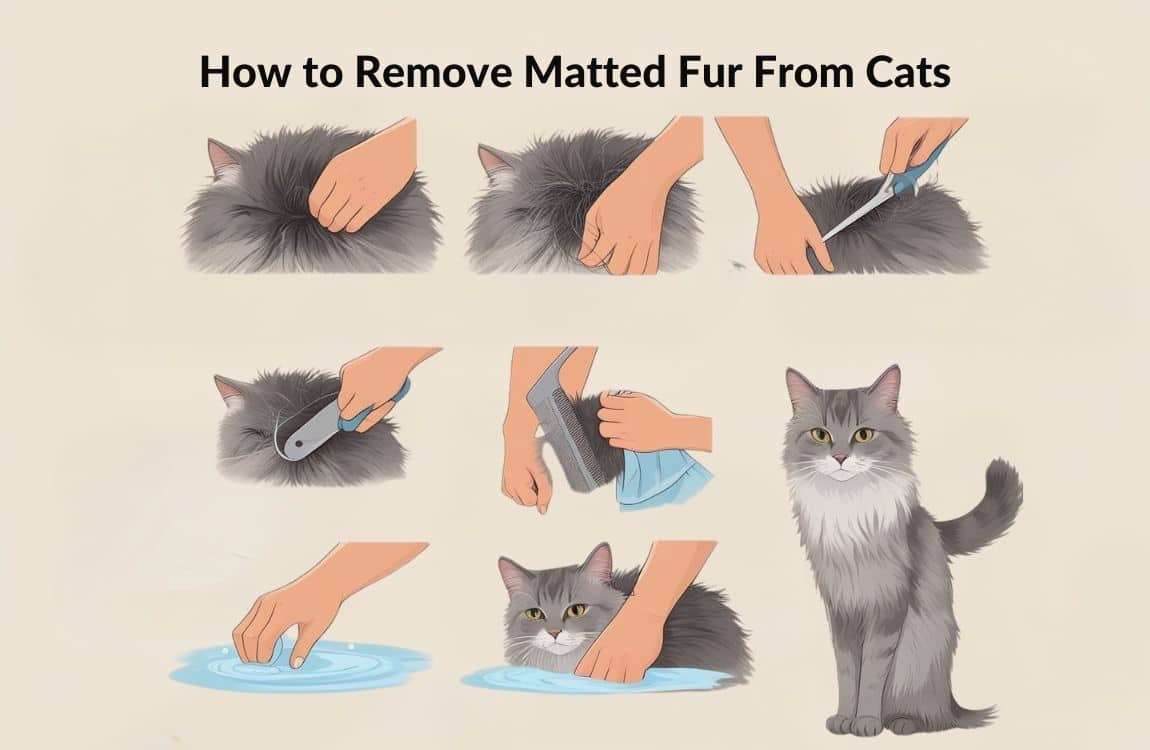
5. Trim Fur Only If Necessary
If sticky material is too close to the skin or impossible to remove:
- Use blunt-tip scissors.
- Slide a comb between the skin and fur to protect your cat.
- Carefully snip off the affected fur.
- Cut only small bits at a time.
Never use sharp scissors near the skin. If you’re not confident, ask a groomer or vet for help.
6. Comfort And Reward Your Cat
After cleaning, comfort your cat with gentle words and treats. Grooming can be stressful, so positive experiences help for next time.
When To See The Veterinarian
Sometimes, it’s best to seek professional help:
- The sticky covers a large area.
- Your cat’s skin is red, bleeding, or swollen.
- The substance is unknown or possibly toxic.
- Your cat is very stressed or aggressive.
- The sticky is near eyes, mouth, or genitals.
Vets have safe products and can sedate your cat if needed.
Common Sticky Substances And How To Remove Them
Cats can get into many sticky situations. Here’s a guide for common substances and the best ways to remove them.
| Substance | Best Removal Method | Extra Precautions |
|---|---|---|
| Tree sap | Apply coconut oil, wait, gently comb out | Avoid harsh chemicals |
| Chewing gum | Use oil, break up gum with fingers, comb out | Don’t use ice (too cold for cats) |
| Honey, syrup, food | Wipe with damp cloth, wash with pet shampoo | Don’t let cat lick too much sugar |
| Glue or adhesives | Oil for most glues; see vet for superglue | Superglue can burn skin |
| Paint | Wipe with oil, then wash; oil-based paint needs vet | Paint can be toxic |
| Tar or grease | Use mineral oil, comb out, wash | Don’t use gasoline or solvents |
Non-obvious Insight: Not All Oils Are Safe
Many people think any kitchen oil is okay, but essential oils (like tea tree or eucalyptus) are toxic to cats. Stick to plain coconut or olive oil.
Non-obvious Insight: Timing Matters
Sticky substances are easier to remove when fresh. Dried sap or glue can be much harder and may require trimming fur.
Mistakes To Avoid When Removing Sticky From Cat Fur
It’s easy to make mistakes when you’re worried about your pet. Here are the most common errors and how to avoid them:
- Using human shampoos or dish soap. These can dry out your cat’s skin or cause irritation.
- Trying to pull out sticky fur. This hurts and can make your cat fear grooming.
- Applying strong chemicals. Products like acetone, paint thinner, or alcohol can poison your cat.
- Ignoring stress signs. If your cat hisses, bites, or tries to escape, take a break.
- Letting your cat lick the area. Some sticky substances are toxic if eaten (like glue, paint, or plant sap).
- Cutting too close to the skin. You might injure your cat or cause bleeding.
Always go slow, use safe products, and stop if your cat is in distress.
How To Keep Your Cat Calm During Removal
Some cats are more anxious than others. Here are tips to make the process smoother:
- Speak softly. Use a calm, gentle voice.
- Wrap your cat. A towel “burrito” can keep claws away and help them feel secure.
- Take breaks. If your cat is agitated, pause and try again later.
- Use treats. Offer a tasty snack before, during, and after cleaning.
- Have a helper. Another person can gently hold or distract the cat.
If your cat becomes very stressed, don’t force the process. It’s better to try in small sessions or ask a professional for help.
Table: Safe Vs. Unsafe Products For Sticky Removal
Some products are safe for cats—others are not. Here’s a quick comparison:
| Product | Safe for Cats? | Notes |
|---|---|---|
| Coconut oil | Yes | Small amounts only |
| Olive oil | Yes | Wash out after use |
| Mineral oil | Yes | For topical use only |
| Dish soap | No | Too harsh for skin |
| Essential oils | No | Toxic to cats |
| Acetone | No | Highly toxic |
| Pet-safe wipes | Yes | Choose unscented |
| Human shampoo | No | Not pH-balanced for cats |
Always read product labels. When in doubt, call your vet.
Special Cases: Sticky Near Eyes, Mouth, Or Genitals
If the sticky substance is close to sensitive areas, be extra careful:
- Do not use oils or shampoos near eyes or mouth.
- Try to gently loosen the sticky with a damp cotton ball.
- If you cannot remove it easily, or your cat seems uncomfortable, contact your veterinarian.
- Never try to cut near sensitive areas by yourself.
Home Remedies: What Works And What To Avoid
Many people search for home remedies. Some are safe, others are not. Here’s what you can use:
Safe Home Remedies
- Plain cooking oils (coconut, olive, vegetable): Good for breaking down sap or gum.
- Warm water and pet shampoo: Safe for most sticky foods.
- Unscented pet wipes: For small, non-oily sticky spots.
Remedies To Avoid
- Peanut butter: Sometimes used for gum in humans, but too oily and salty for cats.
- Butter or margarine: Can spoil and cause digestive upset.
- Alcohol, acetone, WD-40: All toxic to pets.
- Lemon juice or vinegar: Too acidic and may irritate skin.
Always choose products made for pets when possible.
Aftercare: Keeping Your Cat’s Fur Healthy
Once you’ve removed the sticky, focus on aftercare:
- Check the skin: Look for redness, swelling, or cuts. If you see any problems, call your vet.
- Brush your cat regularly: This helps remove debris and prevents matting.
- Provide a safe, clean environment: Keep floors and tables free of sticky spills.
- Keep dangerous products out of reach: Store glue, paint, and other sticky items in cabinets.
Healthy fur is soft, shiny, and clean. If you notice repeated sticky incidents, your cat might need more supervision or a safer play area.

Credit: www.reddit.com
How Often Should You Groom Your Cat?
Regular grooming is key to a clean, healthy coat. Here’s a basic schedule:
| Cat Type | Recommended Grooming Frequency | Why It Matters |
|---|---|---|
| Short-haired cats | Once per week | Removes loose fur, checks for debris |
| Long-haired cats | 2–3 times per week | Prevents mats, finds sticky spots early |
| Outdoor cats | 2–4 times per week | Higher risk of sticky substances |
| Senior or sick cats | Daily check | May not groom themselves well |
Regular brushing means you’ll spot sticky messes before they become a problem.
Emergency Situations: What To Do
Sometimes, sticky substances are dangerous or your cat is in distress. Here’s what to do in an emergency:
- If your cat is choking or can’t breathe: Go to the nearest vet immediately.
- If your cat ingested a toxic substance: Call your vet or an animal poison control center right away.
- If there’s a large amount of sticky on the fur: Don’t try to remove it all at once. Cover the area with a towel to prevent licking and seek veterinary help.
- If your cat is panicking: Secure them in a carrier and call your vet.
Don’t wait if you’re unsure. Fast action can save your cat’s life.
Credit: monsieurgroomer.com
Professional Grooming Vs. At-home Care
Should you call a professional, or can you handle it yourself? Here’s a quick comparison:
At-Home Removal:
- Good for small, simple sticky spots.
- Less stressful for cats who fear travel.
- Costs less and can be done quickly.
Professional Grooming:
- Best for large areas, heavy matting, or difficult substances.
- Groomers have special tools and experience.
- Can sedate anxious or aggressive cats if needed.
If you’re unsure, call your vet or a groomer for advice.
How To Prevent Sticky Problems In The Future
Prevention is always better than cure. Here are ways to keep your cat’s fur clean:
- Keep sticky foods and products out of reach. Store honey, syrup, glue, and paint in closed cabinets.
- Clean up spills immediately. Don’t leave sticky messes on the floor or counters.
- Block off risky areas. Keep cats out of art rooms, garages, or workshops.
- Brush your cat often. You’ll spot debris before it becomes a bigger problem.
- Check your cat after outdoor play. Look for leaves, sap, or other sticky material.
A little prevention saves time and stress for both you and your cat.
What If The Sticky Substance Is Unknown?
Sometimes, you won’t know what got in your cat’s fur. Here’s what to do:
- Avoid using strong cleaners or home chemicals.
- Try a small amount of coconut or olive oil to loosen the sticky.
- Wash with a pet-safe shampoo.
- If the sticky won’t come out, or your cat’s skin reacts, call your vet.
Unknown substances could be toxic. When in doubt, get professional help.
Real Cat Owner Experiences
Many cat owners have faced this problem. Here’s what some learned:
- “My cat got syrup in his tail. I used warm water and a little coconut oil. It took patience, but it worked.”
- “Superglue got on my cat’s paw. I went straight to the vet—they removed it safely.”
- “Tree sap was hard to remove. Oil softened it, but I had to trim some fur.”
The key is patience, gentle handling, and knowing when to ask for help.
How Vets Remove Sticky From Cat Fur
Veterinarians have special tools and products for tough situations:
- Medical clippers: For safely shaving sticky areas without cutting skin.
- Pet-safe solvents: Used in small amounts for glue or tar (never for home use).
- Sedation: For very anxious cats, so removal can be done safely.
- Aftercare: Checking for burns, wounds, or skin reactions.
If you’re worried, don’t wait—vets are trained for these emergencies.
Myths And Misunderstandings
There are many myths about cat fur care. Let’s clear up a few:
- “Any oil is safe.” False. Some oils are toxic. Stick to coconut or olive oil.
- “Cats always clean themselves.” False. Sticky substances can’t always be licked away and can be dangerous.
- “Cutting is always the answer.” False. Cutting can hurt your cat. Try oil and combing first.
- “Superglue can be washed out.” False. Superglue often needs professional removal.
Trust advice from vets and pet professionals—not random internet tips.

Credit: www.reddit.com
The Science Behind Cat Fur And Sticky Substances
Cat fur is made of multiple layers: guard hairs (long, protective), awn hairs (support), and down hairs (soft undercoat). Sticky substances often cling to the outer layers but can seep into the undercoat. Oils work by breaking the bond between the sticky and the fur, making it easier to comb out. However, if the sticky dries or gets close to the skin, it may require careful trimming or professional help.
Cats also have sensitive skin. Their skin pH is different from humans, which is why pet-safe products are important.
What To Do If Sticky Won’t Come Out
If you’ve tried oil, combing, and gentle washing but the sticky remains:
- Take a break—don’t stress your cat.
- Try again after a few hours or the next day.
- If the sticky is still there after two or three attempts, call your vet or a groomer.
It’s better to get expert help than to risk hurting your cat.
Cats With Long Fur: Special Advice
Long-haired cats are more likely to get sticky substances in their fur. For these breeds:
- Use a wide-toothed comb first, then a fine comb.
- Check for mats or tangles before starting.
- Work in small sections.
- Take extra care not to pull or tug.
Regular grooming is even more important for long-haired breeds.
Is It Ever Safe To Shave Your Cat?
Some owners consider shaving their cat to remove sticky fur. Shaving is usually not needed except in extreme cases (very large, hard mats or sticky messes). Shaving can stress cats and exposes their skin to sunburn and injury. Only a vet or professional groomer should shave a cat.
Aftercare: Watching For Problems
After removing sticky material, keep an eye on your cat for the next 24–48 hours:
- Watch for licking, scratching, or signs of pain.
- Check the skin for redness, swelling, or sores.
- If your cat acts differently (hides, stops eating, limps), call your vet.
Sometimes, irritation appears after the sticky is gone. Quick action prevents bigger health issues.
Frequently Asked Questions
How Can I Safely Remove Glue From My Cat’s Fur?
Use a small amount of coconut or olive oil to soften regular glue. Gently massage the oil into the sticky area, wait a few minutes, and try to comb out the glue. If the glue is superglue or covers a large area, go to your veterinarian immediately.
Do not use acetone or nail polish remover—they are toxic for cats.
What Should I Do If My Cat Licked A Sticky Substance?
If your cat licked something sticky, try to identify what it was. Some things (like syrup) are mostly harmless in small amounts, but glues, paints, and cleaning products can be toxic. If you’re unsure or your cat shows signs of illness (vomiting, drooling, acting strange), call your vet right away.
Are There Pet-safe Products For Removing Sticky From Fur?
Yes, there are pet-safe shampoos and unscented grooming wipes designed for cats. You can also use small amounts of coconut or olive oil. Avoid anything with strong scents, essential oils, or harsh chemicals. When in doubt, ask your vet for a product recommendation.
Can I Use Peanut Butter To Remove Gum From My Cat’s Fur?
It’s better not to use peanut butter. While peanut butter can help remove gum in humans, it is too oily, may have xylitol (which is toxic to cats), and can upset your cat’s stomach. Stick to coconut or olive oil instead.
Where Can I Find More Information On Toxic Substances For Cats?
For a reliable list of substances dangerous to cats, check the ASPCA’s Animal Poison Control page: ASPCA Animal Poison Control.
Helping your cat stay clean and healthy is part of being a caring pet owner. With patience, safe products, and the right techniques, you can remove sticky from cat fur and keep your feline friend happy. If you ever feel unsure, remember that your veterinarian is the best resource for advice and care.