
Choosing the right scissors for dog grooming can make a big difference in the results you achieve and the safety of your pet. Whether you are a professional groomer or a dog owner who wants to do grooming at home, it’s important to understand how scissor size affects performance, comfort, and styling outcomes. Many people focus only on brands or blade types, but the size of your scissors is often the key to efficient, safe grooming. In this guide, you’ll learn how to select the ideal scissor size for your dog’s breed, coat type, and specific grooming tasks. You’ll also discover practical tips that most beginners miss, mistakes to avoid, and real-world examples to help you make confident choices.
Why Scissor Size Matters In Dog Grooming
The size of grooming scissors isn’t just about length. It affects how easy it is to handle the scissors, how precise your cuts are, and how safe the process is for your dog. Small scissors offer better control for delicate areas, while larger scissors can handle big sections of fur quickly. But there’s more to it than just speed.
For example, using scissors that are too large on a small dog can increase the risk of accidental cuts. On the other hand, using tiny scissors on a large breed can make grooming tiring and slow. A well-chosen scissor size reduces mistakes, saves time, and leads to a more professional finish.
Understanding Scissor Length: What Do The Numbers Mean?
Dog grooming scissors are measured from the tip of the blade to the end of the handle. Common sizes range from 4.5 inches to 8.5 inches. The right size depends on the task, the size of your dog, and your hand comfort.
Here’s a quick overview:
- Short scissors (4.5–5.5 inches): Great for detail work, faces, paws, and ears.
- Medium scissors (6–7 inches): Good for general grooming and blending.
- Long scissors (7.5–8.5 inches): Best for large dogs, big body areas, and straight cuts.
Most professionals own several sizes, switching as needed for different parts of the dog’s body. If you’re just starting, you may want to begin with a medium size and add specialized scissors later.

Credit: ghostlayerdesign.com
Choosing The Right Scissor Size For Your Dog’s Breed
Different dog breeds require different approaches. A toy poodle and a golden retriever have very different grooming needs. Here are some general guidelines for matching scissor size to breed size:
| Dog Breed Size | Recommended Scissor Size | Example Breeds |
|---|---|---|
| Small (under 15 lbs) | 4.5–6 inches | Pomeranian, Chihuahua, Maltese |
| Medium (15–45 lbs) | 6–7 inches | Cocker Spaniel, Beagle, Shih Tzu |
| Large (over 45 lbs) | 7–8.5 inches | Golden Retriever, Labrador, Standard Poodle |
These guidelines help you avoid using scissors that are difficult to control or too slow for the job. However, coat type and grooming style also play a role.
Scissor Size And Coat Types: What You Need To Know
The thickness and texture of your dog’s coat affect which scissor size works best. Here’s how:
- Fine, silky coats: Short to medium scissors (4.5–6.5 inches) for accuracy.
- Dense, double coats: Medium to long scissors (6–8.5 inches) for efficiency.
- Curly coats: Medium scissors (6–7 inches) for control when shaping curls.
For dogs with mats or tangles, smaller scissors can help cut safely near the skin. For thick, fluffy dogs, longer scissors help you finish faster and create smooth lines.
Types Of Dog Grooming Scissors And Their Sizes
Dog grooming scissors come in several shapes and sizes. Each type has a specific purpose.
Straight Scissors
Straight scissors are the most versatile. They come in lengths from 4. 5 to 8. 5 inches. Short straight scissors are ideal for detail work (eyes, feet). Long straight scissors are best for cutting long, straight lines on the body and legs.
Curved Scissors
Curved scissors help create rounded shapes. They are especially useful for shaping the head, feet, and tail. Most curved scissors are 6–7. 5 inches, but shorter versions exist for tiny dogs.
Thinning Or Blending Scissors
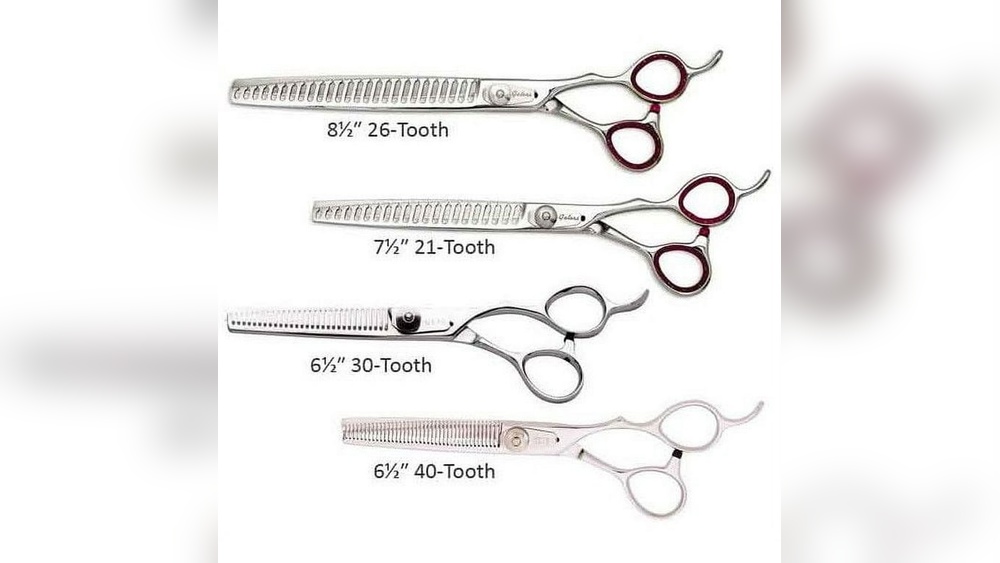
Thinning scissors have teeth that remove bulk without leaving harsh lines. They come in 5. 5–7 inch sizes. Medium sizes are easiest to control, especially for blending around the face.
Chunker Scissors
Chunkers remove large amounts of hair quickly. They’re usually 6–7 inches, and best for thick coats. Beginners often overlook chunkers, but they save time and prevent fatigue.
How Scissor Size Affects Comfort And Safety
One of the most overlooked factors is hand comfort. Using scissors that are too long or too short for your hand can cause strain, especially during long grooming sessions. Most people find that 6–7 inch scissors fit their hands well for general work. For small hands, shorter scissors are easier to control.
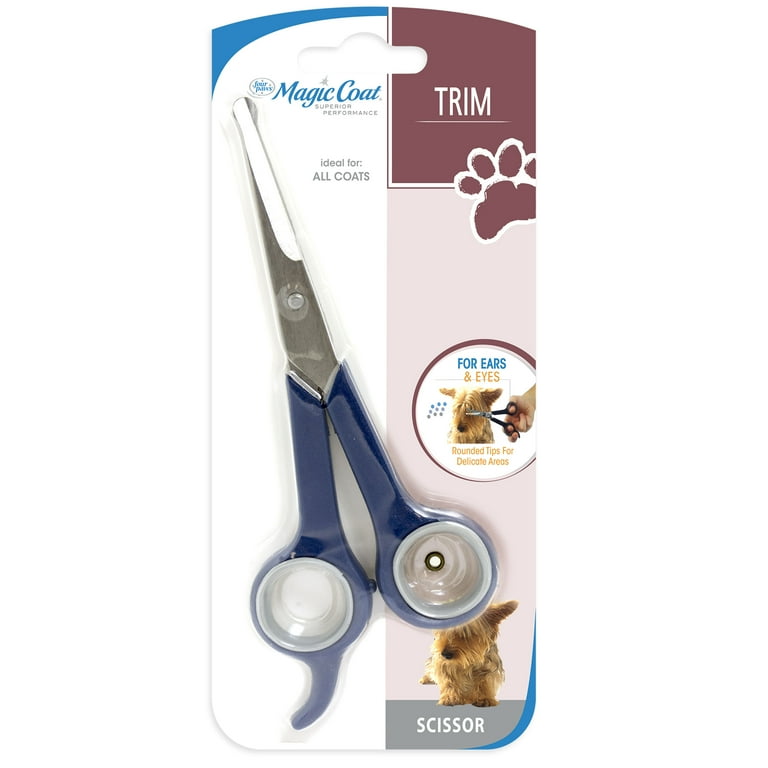
Safety is also key. Large scissors can be dangerous on small dogs or sensitive areas. Using appropriately sized scissors reduces the risk of accidental nicks and allows you to work more confidently.
Scissor Size For Specific Grooming Tasks
Different parts of your dog need different scissor sizes. Here’s a breakdown:
| Grooming Task | Recommended Scissor Size | Notes |
|---|---|---|
| Face | 4.5–5.5 inches | Small size for safety and precision |
| Paws | 4.5–5.5 inches | Short blades for trimming between toes |
| Ears | 5–6 inches | Medium size for control |
| Body | 6–8.5 inches | Long scissors for fast, straight cuts |
| Tail | 6–7.5 inches | Medium to long scissors for shaping |
| Blending | 5.5–7 inches | Thinning scissors for smooth finish |
How To Measure Your Hand For Scissor Size
Hand size matters when choosing grooming scissors. If scissors are too big or too small for your hand, you may lose control or feel discomfort.
To measure your hand:
- Open your hand flat.
- Place a ruler from the tip of your middle finger to your palm.
- If your hand measures less than 6 inches, choose scissors under 6.5 inches.
- If your hand measures 6–7 inches, pick scissors up to 7 inches.
- If your hand is larger, you can use scissors up to 8.5 inches comfortably.
Trying scissors in person, if possible, can help you feel which size fits best.

Credit: ghostlayerdesign.com
Mistakes Beginners Make When Choosing Scissor Size
New groomers often make these errors:
- Picking only the longest scissors to speed up grooming. Long scissors are hard to control, especially for detail work.
- Ignoring hand comfort. Using scissors that don’t fit your hand can cause muscle fatigue.
- Using one size for all tasks. Different body parts need different sizes for safety and precision.
- Not considering coat type. Fine coats need smaller scissors; thick coats need longer ones.
Avoiding these mistakes leads to safer and more professional grooming.
How Professional Groomers Choose Scissor Size
Experienced groomers use multiple scissor sizes. They choose based on:
- Dog’s breed and size
- Coat type and thickness
- Grooming style requested
- Hand comfort and grip
- Area being groomed
They also keep backup scissors in different sizes for tricky areas or when a dog moves unexpectedly. Professionals often recommend investing in a set of scissors rather than just one pair.
Comparing Dog Grooming Scissor Sizes
For many buyers, it’s helpful to compare popular sizes side by side. Here’s a look at how the most common sizes stack up for different tasks and dog breeds.
| Scissor Size | Best For | Dog Size | Ease of Use | Safety |
|---|---|---|---|---|
| 4.5–5.5 inches | Face, paws, ears | Small | Easy to control | Very safe |
| 6–7 inches | Body, blending | Medium | Balanced control | Safe |
| 7.5–8.5 inches | Large body areas | Large | Fast cutting | Requires care |
This comparison helps you see why different sizes are needed for different tasks.
How Scissor Size Affects Grooming Results
The right scissor size leads to:
- Clean lines and smooth blending
- Faster grooming times
- Reduced fatigue for you
- Safer experience for your dog
If you use scissors that are too big, you might leave uneven cuts or accidentally hurt your dog. If your scissors are too small for the task, you may get choppy results and tire out your hand.
Tips For Buying Dog Grooming Scissors By Size
Here are practical tips:
- Buy a set. Sets usually include short, medium, and long scissors for all tasks.
- Check reviews. See what other groomers say about comfort and control for each size.
- Try before you buy. If possible, test scissors in person.
- Consider finger rests. Some scissors have removable finger rests for better comfort.
- Choose quality steel. High-quality steel stays sharp longer and cuts more smoothly.
A well-chosen scissor set lasts for years and improves your grooming skills.
Non-obvious Insights: What Most People Miss
Many beginners don’t realize these points:
- Scissor size affects hand position. Longer scissors require a different grip and can change the angle of your wrist, which affects control.
- Blade length doesn’t always match handle length. Some scissors have longer handles but shorter blades, which changes how they feel in your hand.
Understanding these details can help you avoid buying scissors that feel awkward or unsafe.
How Dog Temperament Affects Scissor Size Choice
If your dog is nervous or moves a lot during grooming, smaller scissors are safer. They allow you to work slowly and avoid injury. For calm dogs, longer scissors can speed up grooming.
Another tip: If your dog has a history of biting, use short scissors for sensitive areas like the face, and keep your hands away from the mouth.
Scissor Size And Left-handed Groomers
Most scissors are made for right-handed people, but left-handed groomers need special scissors. If you are left-handed, choose scissors made for your hand. They usually come in the same sizes, but the handle design is different.
Using the correct size for your dominant hand reduces strain and improves safety.
How Often To Replace Dog Grooming Scissors
Scissor size doesn’t affect how often you replace them, but bigger scissors sometimes go dull faster because they cut more hair. Check your scissors every few months for sharpness. If you feel tugging or see uneven cuts, it’s time to sharpen or replace your scissors.
Investing in quality scissors in the right size means you replace them less often.
Maintaining Your Dog Grooming Scissors
Proper maintenance keeps your scissors working well:
- Clean blades after each use to prevent rust and buildup.
- Oil the pivot point regularly for smooth action.
- Store in a protective case to avoid damage.
- Sharpen as needed based on use.
Well-maintained scissors in the right size last longer and deliver better results.
How Scissor Size Fits Into Your Grooming Routine
The best grooming routines use different scissors for different tasks. For example:
- Start with long scissors for the body.
- Switch to medium scissors for legs and tail.
- Use short scissors for face, paws, and ears.
- Finish with thinning scissors for blending.
This approach leads to a professional look and keeps your dog comfortable.
Real-world Example: Grooming A Shih Tzu
Let’s say you’re grooming a Shih Tzu. This breed has a fine, silky coat and a small body. Here’s how you might use scissors:
- 5-inch straight scissors for the face and paws.
- 6-inch curved scissors for shaping the head.
- 6.5-inch thinning scissors for blending around the ears.
- 7-inch straight scissors for the body if the dog is larger.
Using the right sizes helps you achieve a neat, comfortable trim.
Real-world Example: Grooming A Golden Retriever
For a Golden Retriever, you need longer scissors:
- 7.5–8-inch straight scissors for the body and tail.
- 6-inch curved scissors for feathering the legs.
- 7-inch chunker scissors for removing bulk on the chest and back.
- 5.5-inch scissors for detailed trimming around the ears and feet.
This routine saves time and creates a smooth finish.
Scissor Size And Grooming Frequency
If you groom your dog often, choose scissors that fit your hand comfortably for long sessions. Regular grooming means you’ll use your scissors more, so comfort and control are even more important.
For dogs that need only occasional trimming, you can use fewer scissors, but still match the size to the task.
Budget Considerations: Should You Buy Multiple Sizes?
If you’re starting, you might worry about cost. Buying one medium-size scissor (6–7 inches) is a good start. As you gain experience, invest in shorter scissors for detail work and longer scissors for big dogs.
Professional sets range from $40 to $200 depending on quality and number of scissors. Spending more on quality and variety saves money in the long run, because you replace scissors less often and get better results.
Popular Dog Grooming Scissor Brands And Their Size Options
Some brands offer a wide range of sizes. Here are a few examples:
- Kenchii: 5, 6, 7, 8 inch options, known for quality steel.
- Shark Fin: Ergonomic handles, sizes from 5 to 8.5 inches.
- Andis: Affordable, reliable, common sizes are 6 and 7 inches.
- Geib: Many professional options, sizes up to 8.5 inches.
Choose a brand that offers the size you need, but prioritize fit and comfort over brand name.
How Scissor Size Affects Training And Learning
Learning to groom is easier with scissors that fit your hand and match the task. Start with medium scissors, then practice with short and long ones as you gain confidence.
Many grooming schools recommend starting with 6–7 inch scissors, then adding specialized sizes for advanced techniques.
Environmental Impact: Choosing Durable Scissors
Durable scissors in the right size last longer, reducing waste. Stainless steel scissors, especially in professional sizes, can last years with proper care. Buying fewer, better scissors is more eco-friendly than buying cheap ones that break quickly.
How To Store Dog Grooming Scissors By Size
Keep your scissors organized by size. Many grooming cases have slots for each size. This makes it easy to grab the right scissors for each task and prevents damage.
Label your scissors or use color-coded grips to identify sizes quickly.
Advanced Grooming Styles And Scissor Size
Complex grooming styles, like teddy bear cuts or show trims, require multiple scissor sizes. For example:
- Teddy bear cut: Use 6-inch curved scissors for shaping, 5-inch straight scissors for face, 7-inch straight scissors for body.
- Show trim: Requires long scissors for body, short scissors for precise lines, and thinning scissors for blending.
Practice with different sizes to master advanced styles.
Credit: www.walmart.com
Grooming Small Dogs Vs. Large Dogs: Scissor Size Differences
Small dogs need short scissors for safety and control. Large dogs need longer scissors to cover more area quickly. Medium dogs benefit from mid-size scissors, but you may need short scissors for detail work.
If you groom both small and large dogs, invest in at least three sizes: short, medium, and long.
Scissor Size And Grooming Tools Sets
Many grooming tool sets include scissors of different sizes. Look for sets with:
- Short scissors (4.5–5.5 inches)
- Medium scissors (6–7 inches)
- Long scissors (7.5–8.5 inches)
- Thinning scissors (5.5–7 inches)
Sets like these offer flexibility and value.
How Scissor Size Affects Grooming Speed
Longer scissors cover more area per cut, speeding up grooming. But they require skill and care. Short scissors are slower but safer and more precise. Balance speed and safety by using the right size for each task.
Health And Ergonomics: Preventing Injury With Correct Scissor Size
Using scissors that fit your hand and the task prevents strain and injury. Groomers who use the wrong size often develop wrist pain or tendon issues. Choose ergonomic scissors in the right size to keep your hands healthy.
Data: Groomer Preferences By Scissor Size
A recent survey from the National Dog Groomers Association of America found:
- 60% of groomers use 6–7 inch scissors for general grooming.
- 25% use 4.5–5.5 inch scissors for detail work.
- 15% use 7.5–8.5 inch scissors for large breeds.
This data shows why medium scissors are the most popular starting point.
Where To Learn More About Dog Grooming Scissor Sizes
For further reading and professional advice, visit the American Kennel Club, which offers detailed grooming guides and breed-specific tips.
Frequently Asked Questions
What Is The Best Scissor Size For Grooming A Small Dog?
For small dogs, choose 4.5–6 inch scissors. Short scissors offer better control for sensitive areas like the face, paws, and ears. Medium scissors can be used for the body if the dog is slightly larger. Always match scissor size to your dog’s breed and coat type.
Can I Use One Scissor Size For All Grooming Tasks?
It’s possible, but not recommended. Different tasks require different sizes for safety and precision. Use short scissors for detail work, medium scissors for general grooming, and long scissors for large areas. Investing in a set ensures better results.
How Do I Know If My Scissor Size Fits My Hand?
Measure your hand from the tip of your middle finger to your palm. If your hand is under 6 inches, choose scissors under 6. 5 inches. If your hand is larger, you can use up to 8. 5 inch scissors comfortably.
Trying scissors in person is the best way to check fit.
Are Left-handed Dog Grooming Scissors Available In All Sizes?
Yes, most brands offer left-handed scissors in the same sizes as right-handed versions. Look for scissors with ergonomic handles designed for your dominant hand. Using the correct size improves comfort and safety.
How Often Should I Sharpen Or Replace Dog Grooming Scissors?
Check your scissors every few months. If you feel tugging or see uneven cuts, sharpen them or replace as needed. Quality scissors in the right size last longer and need less frequent replacement with proper care.
Dog grooming is easier and safer when you choose the right scissor size for your pet, your hand, and each grooming task. Whether you’re a beginner or a professional, understanding how scissor size affects performance and safety can transform your grooming routine.
Take time to match scissor size to breed, coat type, and your own comfort—your dog will thank you with a healthier, happier coat.