
Choosing the right dog grooming scissors is more important than many people realize. Professional groomers know that the right tool makes every cut smoother, safer, and faster. But for pet owners, picking the best scissors can feel confusing. There are so many types, sizes, and prices.
Some scissors look the same, but they perform very differently. If you want to groom your dog at home—or even start a grooming business—understanding how to choose scissors can save you money, reduce mistakes, and help your dog look and feel better.
This guide will help you make the right decision. We’ll look at the different types of grooming scissors, what features really matter, and how to avoid common mistakes. Whether you have a tiny Yorkie or a fluffy Golden Retriever, you’ll find advice here that makes sense for you.
Let’s make sure your next grooming session is safe, comfortable, and successful—for you and your dog.
Why The Right Dog Grooming Scissors Matter
Grooming scissors are not just tools; they’re an investment in your dog’s comfort and safety. The right scissors help you:
- Achieve a smooth finish
- Prevent accidental nicks or cuts
- Work faster and with less effort
- Reduce hand fatigue
Using poor scissors can make grooming much harder. Dull blades pull hair instead of cutting. Heavy scissors tire your hands. Some cheap models even rust quickly or break after a few uses. When you consider how often you’ll use them, quality scissors are worth every penny.
Understanding The Main Types Of Dog Grooming Scissors
There is no single “best” dog grooming scissor. The right choice depends on your dog’s coat, your skill level, and what kind of grooming you want to do. Here are the most common types:
Straight Scissors
Straight scissors are the basic tool for any groomer. They’re used for cutting straight lines and shaping the dog’s coat. These scissors work best on flat areas like the back, legs, and sides.
- Blade lengths: Usually range from 4 to 8 inches. Longer blades cover more area but can be harder to control on small dogs.
- Ideal for: General trimming, shaping, and removing bulk.
Curved Scissors
Curved scissors have blades that bend slightly. This design helps you create rounded shapes and soft lines.
- Uses: Great for shaping around the head, feet, and tail.
- Sizes: Typically 6 to 8 inches.
Curved scissors are especially useful for breeds like Bichon Frise or Poodle, where a rounded look is desired.
Thinning And Blending Scissors
These scissors, also called blenders or thinners, have one straight blade and one notched blade. They remove bulk without leaving harsh lines.
- Best for: Softening transitions, blending layers, and thinning thick coats.
- Teeth count: More teeth (40+) mean finer thinning. Fewer teeth (20-30) remove more hair per cut.
Chunkers
Chunkers are similar to thinning scissors but with fewer, wider teeth.
- Purpose: Remove more bulk quickly and add texture. Ideal for wavy or curly coats.
- Teeth: Usually 6 to 24.
Ball-tipped Or Safety Scissors
These scissors have rounded tips to protect your dog from accidental pokes.
- Recommended for: Sensitive areas like the face, paws, and around the ears.
- Size: Usually small, 4 to 5 inches.
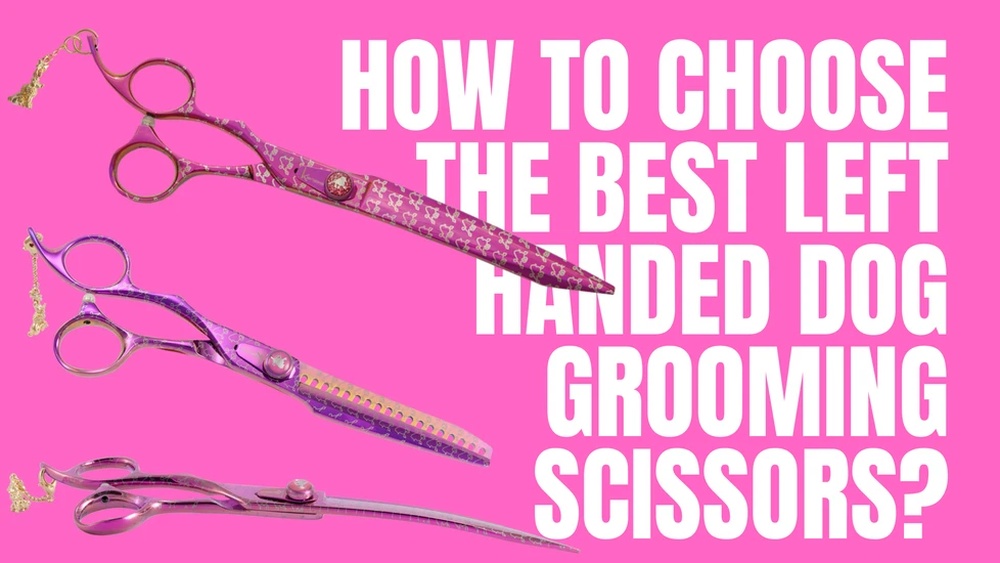
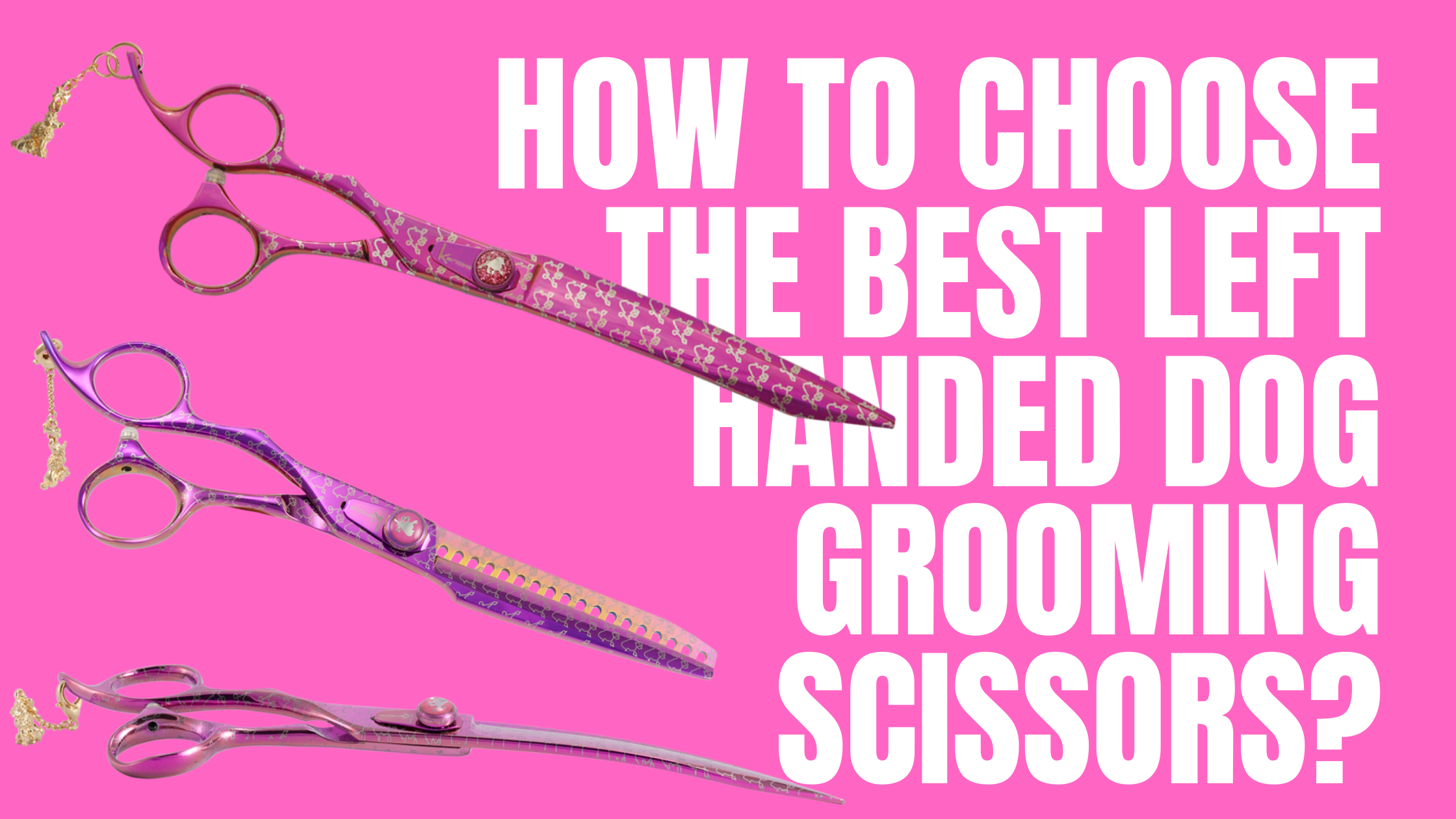
Left-handed Scissors
Some scissors are designed for left-handed users. They allow better control and comfort if you’re left-handed.
Table: Common Dog Grooming Scissors And Their Uses
| Scissor Type | Best For | Sizes | Notes |
|---|---|---|---|
| Straight | Basic trimming, shaping | 4-8 in | Most versatile |
| Curved | Rounded shapes, feet, face | 6-8 in | Ideal for sculpting |
| Thinning/Blending | Softening lines, blending | 6-7 in | Removes bulk gently |
| Chunkers | Heavy thinning, texture | 6-8 in | For thick/wavy coats |
| Ball-Tipped/Safety | Face, paws, sensitive areas | 4-5 in | Reduces injury risk |

Credit: www.youtube.com
Factors To Consider When Choosing Dog Grooming Scissors
Selecting the right scissors isn’t just about type. Several other factors can change your grooming results. Here’s what really matters:
Blade Material
The material used for the blades affects sharpness, durability, and price.
- Stainless steel: Most common. Resists rust, stays sharp, easy to clean. Look for “Japanese” or “German” steel for higher quality.
- Titanium-coated: Adds extra strength and rust resistance. Often has colorful finish. Slightly more expensive but lasts longer.
- Carbon steel: Stays very sharp but can rust if not dried properly. Needs more care.
Insider tip: Some cheap scissors are only “stainless steel” on the outside, with a soft metal core. These dull fast. Check for full stainless construction.
Blade Edge
There are two main edge types:
- Convex edge: Razor sharp, smooth cut, quieter. Best for detail work and advanced groomers. More expensive and delicate.
- Beveled edge: Slightly less sharp, but stronger. Good for beginners and thicker coats. Less likely to nick the hair.
Scissor Size
The length of your scissors should match your dog’s size and your own hand comfort.
- Small dogs: 4-6 inch scissors for control.
- Medium/Large dogs: 7-8 inch scissors for speed.
Long scissors cover more area but need more skill. Shorter scissors are easier for detail work.
Handle Type
Handles can make a big difference in comfort.
- Opposing grip: Both finger holes are straight across. Traditional, but can cause fatigue.
- Offset grip: One handle is shorter. Reduces hand strain. Popular with professionals.
- Swivel handle: Rotates as you cut. Reduces wrist movement. Good for people with arthritis or carpal tunnel.
Finger Rest (tang)
A small extension under the handle supports your pinky. It gives extra control and reduces fatigue.
Weight And Balance
Heavy scissors tire your hand quickly. Well-balanced scissors feel lighter and easier to control, even if the actual weight is the same.
Expert tip: Try holding the scissors for a few minutes before buying. If your hand feels tired, choose a lighter model.
Tension Adjustment
A screw or knob lets you adjust how tightly the blades close. Proper tension makes cutting smoother and prevents hair from bending between the blades.
Price
You don’t need the most expensive scissors, but very cheap ones often disappoint. Expect to spend:
- $20–$50 for good home use
- $50–$150 for professional-quality
Invest in the best you can afford. Cheap scissors can cost more over time because they need frequent replacement.
Matching Scissors To Your Dog’s Coat Type
Different dog breeds have different coat types. The best scissors for a Poodle are not the same as for a Shih Tzu. Here’s how to match scissors to the coat:
Short, Smooth Coats
Breeds: Beagle, Boxer, Dalmatian
- Grooming needs are low. Straight scissors or small safety scissors work for touch-ups around the feet and tail.
Long, Silky Coats
Breeds: Maltese, Yorkshire Terrier, Afghan Hound
- Use straight scissors for body trimming.
- Curved scissors for rounding face and feet.
- Thinning scissors for blending layers.
Thick, Double Coats
Breeds: Golden Retriever, Samoyed, Husky
- Chunkers for removing bulk.
- Thinning scissors for blending.
- Straight scissors for shaping.
Curly Or Wavy Coats
Breeds: Poodle, Bichon Frise, Labradoodle
- Curved scissors for sculpting.
- Chunkers for texture.
- Thinners for transitions.
Wiry Or Terriers
Breeds: Schnauzer, West Highland White Terrier
- Straight scissors for body.
- Thinners for blending harsh lines.
Table: Matching Scissors To Coat Types
| Coat Type | Recommended Scissors | Example Breeds |
|---|---|---|
| Short/Smooth | Straight, Safety | Beagle, Boxer |
| Long/Silky | Straight, Curved, Thinners | Yorkie, Maltese |
| Double Coat | Chunkers, Thinners, Straight | Golden Retriever, Husky |
| Curly/Wavy | Curved, Chunkers, Thinners | Poodle, Bichon |
| Wiry | Straight, Thinners | Schnauzer |
Professional Vs. Home Use: What’s Different?
The scissors you buy for home grooming don’t need to be as advanced as those for a busy salon. But quality still matters.
Professional Scissors
- Sharper, more precise
- Designed for all-day use
- Usually made from high-end steel
- Offer more handle and blade options
Home Grooming Scissors
- Less expensive
- Basic shapes and sizes
- Good enough for touch-ups and light trims
If you groom your dog monthly or less, a mid-range pair is fine. If you have several dogs or groom often, invest in better scissors.
How To Test Dog Grooming Scissors Before Buying
If you can, always test scissors before purchasing. Here’s what to check:
- Open and close the blades a few times. They should move smoothly and quietly.
- Check the blade tips. They should meet perfectly. No gaps.
- Feel the weight. Hold them in your hand for 30 seconds. Any discomfort means they’re not right for you.
- Cut a piece of tissue paper or cotton. Scissors should slice cleanly, without folding or tearing.
- Adjust the tension if possible. Make sure you can do this easily.
Some pet stores have demo models, or you can ask to try before buying. If you order online, check return policies.

Credit: www.clipit-grooming.com
Maintenance Tips: Keeping Your Scissors Sharp And Safe
Even the best scissors need care. Proper maintenance keeps them sharp, safe, and ready for each grooming session.
Cleaning
- Wipe blades with a soft cloth after every use.
- Remove any hair, dander, or moisture.
- For deep cleaning, use alcohol or a disinfectant spray.
Oiling
Apply a drop of scissor oil at the pivot point after cleaning. This reduces friction and prevents rust.
Sharpening
- Most scissors need sharpening every 6–12 months (more often with heavy use).
- Use a professional sharpening service. DIY sharpening can ruin the blade.
- If you notice pulling or rough cuts, it’s time to sharpen.
Storage
- Store scissors in a dry place.
- Use a protective case to prevent drops or moisture damage.
- Never leave scissors wet or dirty.
Pro tip: Don’t use your dog scissors for anything else—not paper, not string, not even human hair. Other materials can dull the blades quickly.
Mistakes To Avoid When Choosing Dog Grooming Scissors
Many first-time buyers make avoidable errors. Here are the most common mistakes—and how to avoid them:
- Buying the cheapest scissors. These dull fast and may not cut well from the start.
- Ignoring your dog’s coat type. Not every scissor works for every breed or coat.
- Choosing the wrong size. Oversized scissors are hard to control, especially for small dogs.
- Skipping handle comfort. Uncomfortable scissors can lead to hand pain or even injury.
- Forgetting about maintenance. Even great scissors need care. Don’t buy if you’re not willing to clean and oil them.
- Not checking return policies. If you buy online, make sure you can return or exchange them if they don’t suit you.
Insider insight: Many groomers keep at least three types of scissors: straight, curved, and thinning. A single pair rarely does everything well.
Credit: kenchiigrooming.com
Comparing Popular Dog Grooming Scissor Brands
There are many brands on the market, but not all are equal. Here’s a comparison of some popular options:
| Brand | Price Range | Best For | Key Features |
|---|---|---|---|
| Kenchii | $60–$200 | Professional | Premium steel, ergonomic design |
| Sharf | $25–$60 | Home, semi-pro | Affordable, good value |
| Geib | $80–$250 | Salon, heavy use | High-end, durable |
| ConairPRO | $15–$40 | Home use | Lightweight, easy to use |
| Lilys Pet | $20–$50 | Beginners | Complete kits, colorful designs |
When choosing a brand, look for warranty, customer service, and reviews from real groomers. Some brands, like Kenchii and Geib, are known for their quality and longevity. Others are more budget-friendly but still reliable for home use.
Buying Online Vs. In-store: What’s Best?
Both options have pros and cons.
Buying In-store
- You can hold and test scissors before buying.
- Staff can answer questions.
- Usually higher prices and smaller selection.
Buying Online
- Huge variety, often better prices.
- Can read reviews and compare specs.
- Can’t test the feel before purchase.
- Risk of counterfeit or poor-quality products.
Tip: Buy from well-known pet stores or directly from the brand. Avoid unbranded scissors from discount websites.
For more on grooming equipment and safety, check the American Kennel Club’s grooming guide.
How Many Scissors Do You Really Need?
If you’re just starting, one good pair of straight scissors is enough for basic trims. But as your skills grow, consider adding:
- Curved scissors for shaping
- Thinning scissors for blending
- Chunkers if your dog has a thick or curly coat
- Safety scissors for the face and paws
Most professional groomers use at least three types on every dog.
Caring For Your Dog During Grooming
Even the best scissors won’t help if your dog is stressed or uncomfortable. Here’s how to make grooming safe and positive:
- Always brush your dog before using scissors. Mats and tangles can hurt if cut directly.
- Use treats or praise to reward calm behavior.
- Work slowly, especially around sensitive areas.
- If your dog resists or seems scared, take a break and try later.
- Never use dull scissors—they pull on hair and can cause pain.
Remember, grooming is about health and happiness, not just appearance.
Frequently Asked Questions
How Often Should Dog Grooming Scissors Be Sharpened?
Most scissors need sharpening every 6 to 12 months, depending on how often you use them. If you notice the blades pulling or not cutting cleanly, it’s time to sharpen. Professional groomers may need sharpening more often.
Can I Use Human Hair Scissors For My Dog?
It’s not recommended. Dog hair is often thicker, tougher, and different in texture than human hair. Dog grooming scissors are designed to handle these differences, ensuring a better cut and reducing the risk of injury.
What Is The Best Size Of Scissors For A Small Dog?
For small dogs, 4 to 6 inch scissors offer the best control and safety. Larger scissors can be harder to maneuver and may cause accidents, especially around the face and paws.
Are Expensive Scissors Really Worth The Price?
Quality scissors last longer, stay sharp, and are more comfortable to use. While you don’t need the most expensive pair, very cheap scissors often dull quickly and can make grooming harder. Consider them an investment in your dog’s well-being.
How Do I Know If The Scissors Are Too Tight Or Too Loose?
If scissors are too tight, they’ll feel stiff and hard to open or close. If too loose, they won’t cut properly and may snag hair. Most grooming scissors have a tension screw you can adjust. Aim for smooth, easy movement with no gaps between the blades.
—
Choosing the best dog grooming scissors is a decision that affects both your dog’s comfort and your own grooming experience. By understanding the different types, what features to look for, and how to match scissors to your dog’s unique coat, you can make a choice that saves time, avoids frustration, and helps your dog look their best.
Remember to care for your tools, start with the basics, and upgrade as your confidence grows. Good scissors make grooming safer, more enjoyable, and—most importantly—keep your dog happy and healthy.