

Cats are known for their self-cleaning habits. Most cats spend hours every day licking and grooming themselves, keeping their fur soft and smooth. But sometimes, even the cleanest cat develops matted fur. These tight tangles can appear suddenly and quickly turn into a problem for both you and your cat. If not handled well, mats can cause pain, skin problems, and even infections. Learning how to remove matted fur on a cat the right way is important for every cat owner.
Mats are more than just a grooming issue—they can become a health risk. Removing them safely requires patience, the right tools, and an understanding of your cat’s comfort and stress levels. This guide will help you understand why mats happen, how to deal with them, and how to prevent them from coming back.
What Causes Matted Fur In Cats?
Cat fur mats for several reasons, and knowing these can help you avoid them in the future. One common reason is shedding. When cats lose hair, the loose fur can get caught in their coat, especially in long-haired breeds. If the old hair is not removed, it forms tangles that become mats.
Other factors include:
- Lack of grooming: Sick, overweight, or older cats may not be able to groom themselves well.
- Outdoor exposure: Cats who spend time outside may pick up burs, dirt, or moisture, which clump the fur.
- Movement and friction: Areas like behind the ears, under the collar, or around the armpits are prone to matting due to rubbing and movement.
- Skin issues: Fleas, wounds, or skin infections can cause your cat to avoid grooming certain spots.
Certain breeds, like Maine Coons or Persians, are more likely to develop mats because of their long, thick fur.
Dangers Of Matted Fur For Cats
Some people think mats are just a cosmetic problem, but they can be dangerous. Mats pull on the skin, which is very sensitive in cats. This can lead to bruising, pain, and even open sores. Severe mats trap dirt and moisture, creating a home for bacteria and parasites.
If mats are not removed, they can cause:
- Skin infections: Bacteria grows under mats, leading to sores or abscesses.
- Restricted movement: Large mats can make it hard for your cat to walk or stretch.
- Behavior changes: Cats in pain may hide, stop eating, or become aggressive.
- Increased risk of other health problems: Chronic skin irritation can affect overall health.
In extreme cases, mats may need to be removed by a vet, and the cat may need antibiotics or other treatments.
:strip_icc()/how-to-de-mat-a-cat-552043-hero-5b73bb2c3cf44a52b2f6527f9478a4f2.jpg)
Credit: www.thesprucepets.com
Types Of Mats And How To Identify Them
Not all mats are the same. Some are small and easy to remove, while others are large, tight, and close to the skin. Knowing the type of mat will help you pick the right approach.
| Type of Mat | Description | Common Location | Removal Difficulty |
|---|---|---|---|
| Surface Mat | Loose, fluffy tangle | Back, sides | Easy |
| Single Tight Mat | Small, close to skin | Behind ears, armpits | Medium |
| Multiple Large Mats | Thick, connected tangles | Neck, belly, hindquarters | Hard |
| Pelted Fur | Hardened, felt-like mass | All over body | Very difficult |
- Surface mats are the easiest to remove, often with just a comb or brush.
- Single tight mats may need special tools or gentle cutting.
- Multiple large mats or pelted fur should be handled with extra care. Severe cases may require professional help.
Preparing To Remove Matted Fur
Before you start, plan ahead. Removing mats can be stressful for your cat, especially if the mats are large or close to the skin. Preparation makes the process safer and easier.
Gather The Right Tools
Having the right tools is key. Here are some helpful items:
- Wide-tooth comb: For loosening and detangling.
- Mat splitter or dematting tool: Designed to cut through mats safely.
- Blunt-nosed scissors: For careful cutting (only if you are confident).
- Slicker brush: For removing loose hair after mats are gone.
- Pet-safe detangling spray: Helps soften mats.
- Treats: For rewarding your cat and keeping them calm.
- Towel: To wrap your cat if needed.
Choose The Right Time And Place
Pick a quiet time when your cat is relaxed, not just after play or meals. Work in a calm area with good lighting. Placing a towel on your lap or table can keep your cat from slipping and help you control movement.
Safety First
Never use sharp scissors near the skin unless you are sure of your skills. A sudden movement can easily cause cuts. Always check the mat’s location—some are very close to the skin, which is thin and easy to injure.
If your cat is very stressed, or the mats are large and tight, it is safer to call your vet or a professional groomer.
Step-by-step Guide: How To Remove Matted Fur
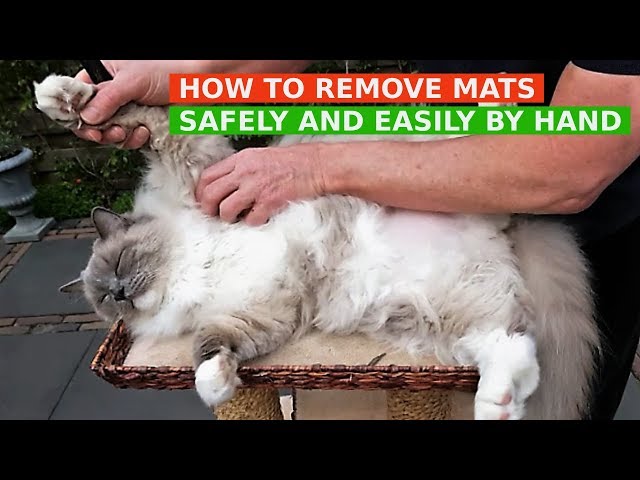
Removing mats takes patience and gentle handling. Here’s a step-by-step approach for most mild to moderate cases.
1. Calm Your Cat
Start by petting your cat and talking softly. Let your cat smell the tools. If your cat is nervous, give a few treats or try calming pheromone sprays.
2. Inspect The Mats
Feel the mats carefully to see how tight they are and how close to the skin. Note any sensitive spots or signs of pain.
3. Loosen The Mat
Spray a little detangling spray on the mat (check that it’s safe for cats). Let it sit for a minute. Gently work your fingers around the mat, pulling it apart a bit. Do not pull hard—cats have thin, sensitive skin.
4. Use A Wide-tooth Comb
Start at the end of the mat (furthest from the skin) and gently comb out small sections. Hold the base of the mat to avoid pulling on the skin. Use a “pick and pull” motion, not hard strokes.
5. Try A Mat Splitter
If the mat is too tight, use a mat splitter or dematting tool. Slide the blunt side under the mat and gently cut it into smaller pieces. This makes it easier to comb out.
6. Careful Cutting (last Resort)
If you must use scissors, make sure they have blunt tips. Place a comb between the mat and skin, then cut above the comb. This protects the skin from injury. Only cut small pieces at a time.
7. Brush Out The Area
Once the mat is gone, gently brush the area with a slicker brush to remove any loose fur. Give your cat a treat and praise them for staying calm.
8. Check For Skin Problems
Look for any redness, sores, or bald patches where the mat was. If you see wounds or signs of infection, contact your vet.
9. Give Breaks As Needed
If your cat becomes restless or upset, stop and try again later. Forcing the process can make your cat fear grooming in the future.
When To Call A Professional
Some mats are too big or too close to the skin for safe home removal. If you notice any of these signs, call your vet or a professional groomer:
- Mats are covering a large part of the body
- Skin is red, bleeding, or smells bad
- Your cat is very stressed or aggressive
- You feel unsure or unsafe using scissors
Some cats may need sedation for safe mat removal, especially if they are very anxious or the mats are severe.
Tools And Products For Dematting Cats
Not all grooming tools are the same. Choosing the right one depends on your cat’s coat type and the severity of the mats. Here’s a comparison of common dematting tools:
| Tool | Best For | Pros | Cons |
|---|---|---|---|
| Wide-tooth comb | Loose tangles, surface mats | Gentle, low risk of injury | Not effective on tight mats |
| Mat splitter | Tight, small mats | Safe if used right, cuts mats apart | Needs practice, not for large mats |
| Slicker brush | After mat removal, daily grooming | Removes loose hair | Can scratch sensitive skin |
| Blunt-nosed scissors | Cutting stubborn mats (with care) | Precise | High risk of skin injury |
| Dematting rake | Long-haired cats, thick mats | Cuts through mats, ergonomic | May pull on skin if used incorrectly |
Always check the tool’s safety features and read reviews before buying. Some tools have rounded tips or safety guards to protect your cat.
Common Mistakes When Removing Matted Fur
Even with the best intentions, mistakes can happen. Avoid these common errors:
- Pulling too hard: This hurts your cat and can damage the skin.
- Using sharp scissors near the skin: One quick movement can cause a serious cut.
- Trying to remove all mats in one session: Go slowly—rushing causes stress and accidents.
- Ignoring your cat’s signals: If your cat hisses, bites, or tries to run, stop and try again later.
- Skipping treats and praise: Positive experiences make future grooming easier.
- Not checking for underlying health issues: Mats may be a sign of arthritis, obesity, or dental pain.
- Bathing a matted cat: Wetting mats makes them tighter and harder to remove.
Preventing Mats In The Future
The best way to deal with mats is to stop them before they start. Regular grooming, even for short-haired cats, keeps fur healthy and tangle-free.
Daily And Weekly Grooming
- Long-haired cats: Brush daily with a slicker brush or wide-tooth comb.
- Short-haired cats: Brush weekly to remove loose hair.
- Focus on problem areas: Behind ears, under legs, around the collar, and under the tail.
Nutrition And Health
Healthy skin and fur start with good nutrition. Feed a high-quality diet with enough protein and fatty acids. Check for allergies or parasites that might cause excess shedding.
Monitor Older Or Sick Cats
Older cats or those with arthritis may not groom well. Help them by brushing more often and checking for mats during cuddle time.
Keep Fur Dry And Clean
Dry your cat if they get wet, and remove any dirt or debris quickly. Moisture makes mats form faster.
Regular Vet Checks
Sometimes mats are a sign of deeper health problems. Schedule regular vet visits to catch issues early.
Special Tips For Different Cat Breeds And Ages
Not all cats are the same. Here are some special considerations:
Long-haired Breeds
Breeds like Persians, Himalayans, and Maine Coons need daily grooming. Their fine, dense fur mats easily. A grooming routine should start when they are kittens to build trust.
Short-haired Cats
Short fur mats less often, but overweight or older cats may still develop tangles, especially around the tail and lower back.
Senior Cats
Older cats may not bend or twist as well. They need more help with grooming. Watch for signs of pain or stiffness—these can affect self-grooming.
Kittens
Start gentle grooming early. Use soft brushes and lots of treats to make grooming a positive experience.
How To Make Grooming Less Stressful
Grooming should be a bonding time, not a battle. Here are some ways to reduce stress:
- Start slow: Begin with short sessions and build up over time.
- Use positive reinforcement: Treats, praise, and gentle petting help your cat relax.
- Create a routine: Groom at the same time and place each day.
- Watch for signs of stress: Panting, dilated pupils, or flattened ears mean it’s time for a break.
- Ask for help: A second person can gently hold your cat if needed.
If your cat truly hates being groomed, talk to your vet. They may suggest calming products or professional grooming.
How To Handle Severe Matting
Sometimes mats are so bad that home care is not enough. If the fur is pelted (hardened into a mass), or your cat is in pain, do not try to cut the mats out yourself.
Professional groomers have special tools and experience. Vets can sedate your cat if needed, making removal painless and safe.
Signs of severe matting include:
- Mats cover more than 25% of the body
- Your cat cannot walk, sit, or lie down comfortably
- The skin under the mats is red, swollen, or has open sores
- Fur smells bad (a sign of infection)
In these cases, quick action is important. Delaying can lead to worse health problems.
What To Do After Removing Mats
Once the mats are gone, focus on healing and prevention.
- Check the skin: Look for any wounds or irritation.
- Apply healing products: If needed, use a vet-recommended ointment.
- Watch for licking or scratching: This could mean the area is still painful.
- Resume gentle grooming: Go slowly, using lots of praise and treats.
If you notice any ongoing problems, such as swelling or a bad smell, call your vet.
Myths And Facts About Matted Fur
There are many myths about cat grooming. Here are some truths:
- Myth: Only long-haired cats get mats.
- Fact: Any cat can get mats, especially if sick or overweight.
- Myth: Bathing will remove mats.
- Fact: Water makes mats tighter and harder to remove.
- Myth: Mats are harmless.
- Fact: Mats can cause pain, infections, and other health issues.
- Myth: Cutting out mats is always safe at home.
- Fact: Scissors can easily injure your cat. Use with extreme caution.
Knowing the facts helps you take better care of your cat.
:strip_icc()/how-to-de-mat-a-cat-552043-01-3bcd9ef0901041f4b5dc04c4c36c9bd8.JPG)
Credit: www.thesprucepets.com
The Science Behind Cat Fur And Matting
Cat fur is made up of two or three layers: guard hairs (long and straight), awn hairs (middle layer), and down hairs (soft undercoat). Long-haired breeds have more undercoat, which tangles easily.
Fur health depends on natural oils. These oils help keep fur smooth and prevent tangles. Illness, age, or poor diet can reduce oil production, leading to dry, tangled fur.
Some studies show that up to 10% of senior cats develop mats due to arthritis or dental disease, which makes grooming painful.
Comparing Home Grooming Vs Professional Grooming
Should you groom your cat at home or use a professional? Here’s a quick comparison:
| Factor | Home Grooming | Professional Grooming |
|---|---|---|
| Cost | Low (tools, time) | Moderate to high (per session) |
| Stress for cat | Low (familiar environment) | Varies (travel, new people) |
| Risk of injury | Higher if untrained | Low (with trained groomer) |
| Best for | Small or surface mats, regular care | Severe mats, pelted fur, difficult cats |
Many owners do basic grooming at home and use a professional for tough cases or a yearly deep clean.
Non-obvious Insights For Cat Owners
Here are two insights that many cat owners miss:
- Early detection makes a big difference: Checking your cat’s fur every week, especially in hidden areas like armpits or under the tail, can catch mats before they become a problem. Early mats are much easier and less painful to remove.
- Underlying health issues are often linked to matting: If your cat has never had mats before and suddenly develops them, it could be a sign of an illness. Pain, arthritis, or dental problems may keep your cat from grooming. Always check with your vet if you see a sudden change.
Additional Resources
If you need more help, consider these options:
- Local animal shelters often offer grooming advice.
- Your vet can recommend trusted groomers.
- Online resources like the ASPCA Cat Grooming Tips provide more detailed guides.
Credit: www.youtube.com
Frequently Asked Questions
How Often Should I Groom My Cat To Prevent Mats?
For long-haired cats, daily brushing is best. Short-haired cats usually need grooming once or twice a week. However, check more often if your cat is older, overweight, or sick.
Can I Use Human Hair Products On My Cat?
No, never use human shampoos or detanglers on cats. Cats have sensitive skin, and many human products contain chemicals or fragrances that are toxic to them. Always use products made for pets.
What If My Cat Hates Being Brushed?
Start slowly with short sessions, lots of treats, and gentle brushing. Try different brushes to see what your cat prefers. If your cat is very fearful, ask your vet about calming products or professional help.
Are There Cat Breeds That Never Get Mats?
No breed is 100% mat-proof, but short-haired breeds and hairless cats are less likely to develop mats. Long-haired breeds, like Persians and Maine Coons, are at higher risk and need more grooming.
When Should I See A Vet About Matted Fur?
See your vet if the mats are large, tight, or causing pain, or if you notice skin problems like redness, swelling, or a bad smell. Also, see your vet if your cat suddenly stops grooming or develops mats for the first time.
Removing matted fur on a cat can take time and patience, but with the right tools and gentle care, you can keep your cat healthy and comfortable. Building a regular grooming routine strengthens your bond and prevents future problems. If you ever feel unsure, reach out to your vet or a professional groomer for guidance.
Your cat will thank you for it.